UAE and Saudi Arabia Account for Half of Gulf’s Cyberattack Volume in Early 2026
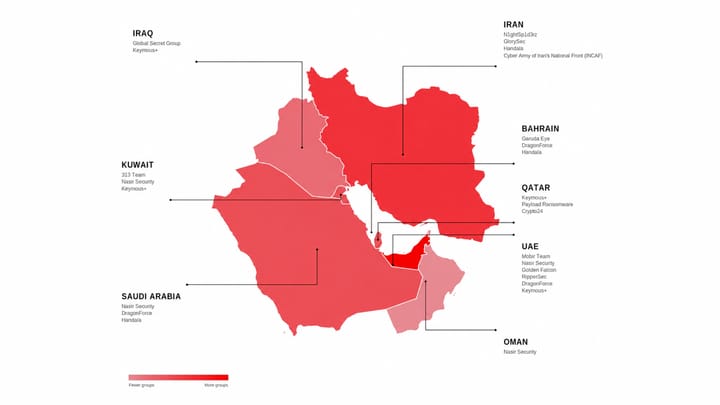
The United Arab Emirates and the Kingdom of Saudi Arabia together bore the brunt of cyber activity in the Gulf, registering roughly 50% of all recorded attacks across the region during the first six months of 2026, according to data cited by security outlet Dark Reading.
Analysts attribute the surge to the rapid expansion of digital services in both economies, which have accelerated cloud adoption, smart‑city initiatives, and online financial platforms. As critical infrastructure becomes increasingly interconnected, threat actors find a larger attack surface and a higher payoff for successful intrusions.
Historically, the Gulf’s cyber threat landscape has been shaped by a mix of financially motivated ransomware groups, state‑aligned espionage teams, and hacktivist collectives. The concentration of attacks on the UAE and Saudi Arabia this year suggests that adversaries are honing their targeting strategies, focusing on nations that host major multinational corporations and serve as regional logistics hubs.
Security firms operating in the Middle East have reported a noticeable shift toward more sophisticated tactics, including multi‑stage malware campaigns, supply‑chain compromises, and the use of encrypted command‑and‑control channels. These methods complicate detection and response, pushing regional cybersecurity teams to adopt advanced threat‑intelligence platforms and automated remediation tools.
Both governments have signaled intent to strengthen their cyber defenses. Recent policy statements emphasize public‑private partnerships, increased investment in cyber‑training programs, and the establishment of joint response centers. While concrete measures are still being rolled out, the heightened focus underscores the strategic importance of protecting digital assets in an economy that relies heavily on technology.
Looking ahead, experts warn that the intensity of attacks is unlikely to wane. The convergence of geopolitical rivalries, lucrative energy markets, and the ongoing digitization of everyday services creates a persistent incentive for malicious actors. Continuous monitoring, cross‑border cooperation, and sustained funding for cybersecurity initiatives will be essential to mitigate the risk and preserve the Gulf’s economic stability.



Comments (0)
Be the first to comment.
Join the discussion