AvisLoader Malware Leverages Encrypted P2P Network to Evade Traditional Takedowns
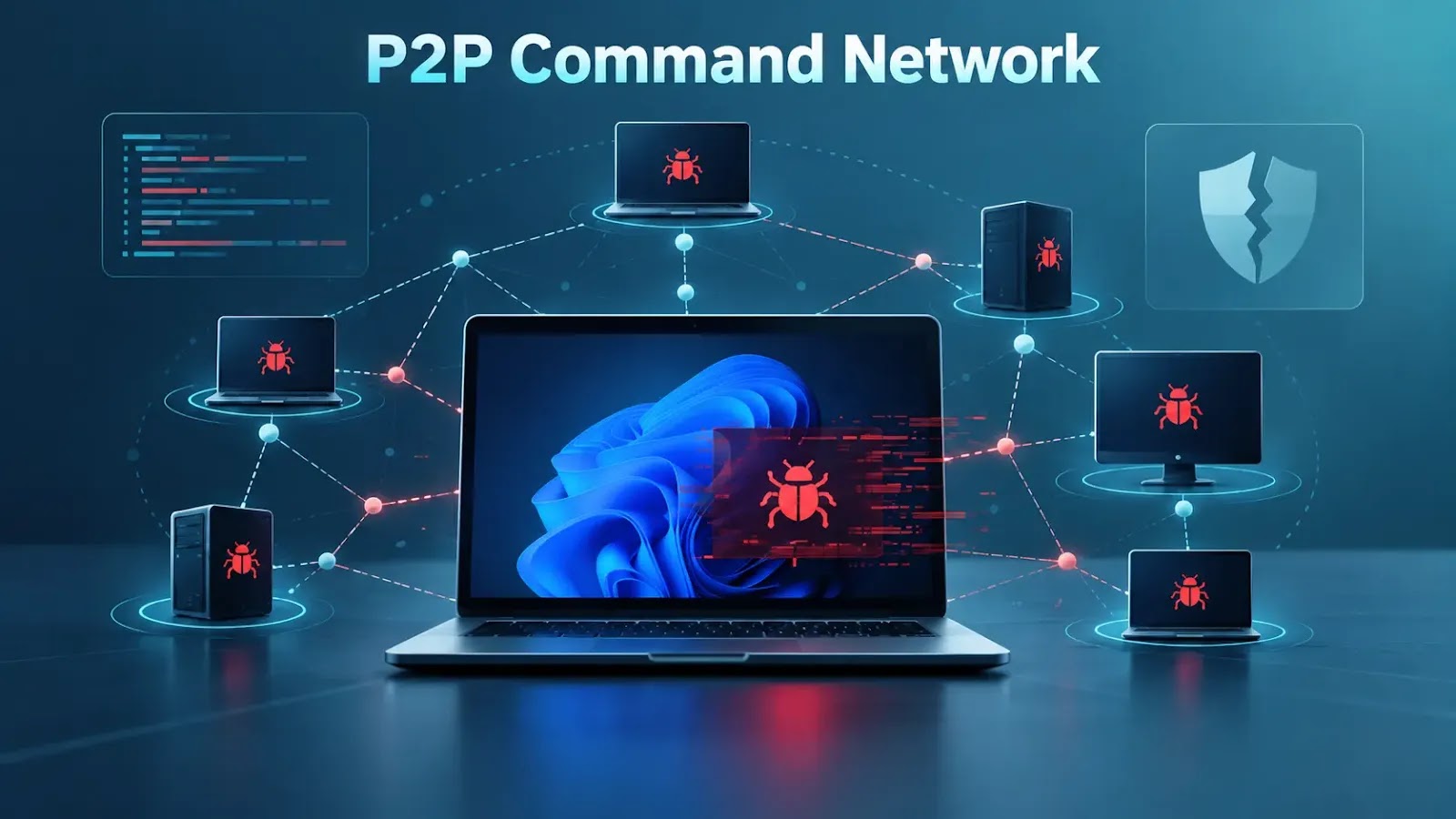
A new Windows malware loader, dubbed AvisLoader, has been observed using an encrypted peer‑to‑peer (P2P) network to keep its operators in control even when standard command‑and‑control (C2) servers are disrupted.
Most malicious programs rely on a fixed domain name, IP address, or a centralized server to receive instructions. When those points are identified and blocked, the infection can be crippled. AvisLoader sidesteps that model by embedding the open‑source Tox protocol, a decentralized messaging system that encrypts traffic and hides the location of participants.
The loader establishes a hidden overlay of compromised hosts that communicate through Tox nodes. Because the protocol distributes messages across the network and encrypts them end‑to‑end, defenders cannot easily trace the source or sink of commands. The malware can pull additional payloads, update its own code, or receive new instructions without ever contacting a traditional C2 address.
Security researchers at GBHackers first reported the family after spotting multiple samples that shared a unique binary stub and the same Tox‑based networking routine. Analysis showed the stub attempts to bootstrap a small set of hard‑coded bootstrap nodes, then negotiates encrypted sessions with any peer that responds, effectively creating a resilient command mesh.
Experts say the approach raises the bar for incident response teams. Traditional mitigation techniques—such as sink‑holing domains or blocking known IP ranges—are ineffective against a system that can re‑route commands through any peer in the mesh. Moreover, the use of Tox, a protocol originally designed for secure chat applications, may blend malicious traffic with legitimate peer‑to‑peer communications, complicating detection.
Analysts recommend expanding network monitoring to include anomalous encrypted P2P flows and applying heuristic‑based detection that looks for the loader's characteristic file‑less execution patterns. As the threat landscape evolves, the emergence of malware like AvisLoader underscores the need for adaptive defenses that can contend with decentralized, encrypted command structures.



Comments (0)
Be the first to comment.
Join the discussion