Fortra Flags Email‑Bombing Surge Followed by Fake IT Support Scams on Microsoft Teams
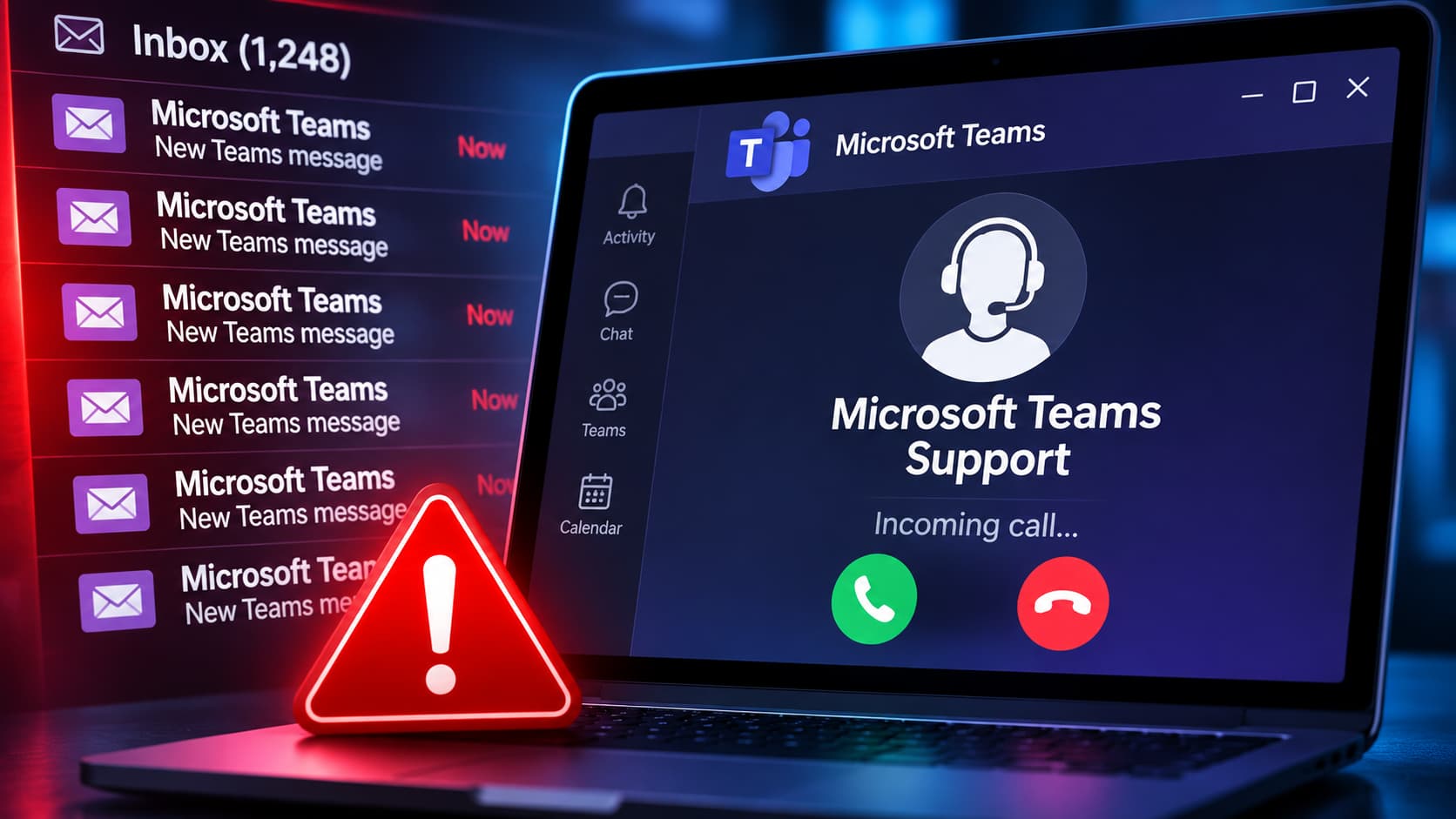
Cyber‑security firm Fortra has warned that a coordinated email‑bombing campaign is being used as a precursor to social‑engineering attacks on Microsoft Teams, where perpetrators impersonate IT support staff to extract credentials or install malware.
The attackers begin by flooding corporate mailboxes with a high volume of messages, often consisting of generic or promotional content. The deluge is intended to overwhelm users, obscure the malicious follow‑up, and create a sense of urgency or confusion that makes recipients more susceptible to subsequent contact.
Within minutes or hours of the bombardment, the same actors switch to Microsoft Teams, sending direct messages that claim to be from the organization’s IT department. These messages typically request verification of login details, ask users to install remote‑access tools, or provide links to what appear to be legitimate support portals. Because Teams is widely trusted for internal communication, the ruse can be convincing, especially when employees are already dealing with a cluttered inbox.
The technique builds on trends that have accelerated since the pandemic, as remote work has increased reliance on cloud‑based collaboration platforms. Email remains a primary vector for phishing, but the added layer of Teams impersonation exploits the growing habit of handling support tickets and troubleshooting through chat, blurring the line between legitimate and fraudulent interactions.
Fortra’s advisory emphasizes basic but essential safeguards: verify any unsolicited IT request through an independent channel, enable multi‑factor authentication, and avoid clicking links or downloading files from unexpected messages. Organizations are also urged to configure email rate‑limiting, employ anti‑spam filters tuned for bulk‑mail patterns, and monitor Teams activity for anomalous messaging from non‑official accounts.
While the campaign’s immediate goal appears to be credential harvesting, the broader impact can include unauthorized network access, data exfiltration, and operational disruption. Small and medium‑size businesses, which may have fewer resources for advanced threat detection, are particularly vulnerable to the combined email‑bombing and Teams‑impersonation approach.
Security teams are advised to educate employees about the two‑stage attack, update internal support procedures, and consider deploying tools that can flag suspicious outbound messages on both email and Teams platforms. As threat actors continue to blend traditional phishing with newer collaboration tools, vigilance and layered defenses will be critical to mitigating the risk.

Comments (0)
Be the first to comment.
Join the discussion