Malware‑Laced Fake GTA VI Download Harvests Gamers’ Passwords and Crypto Data
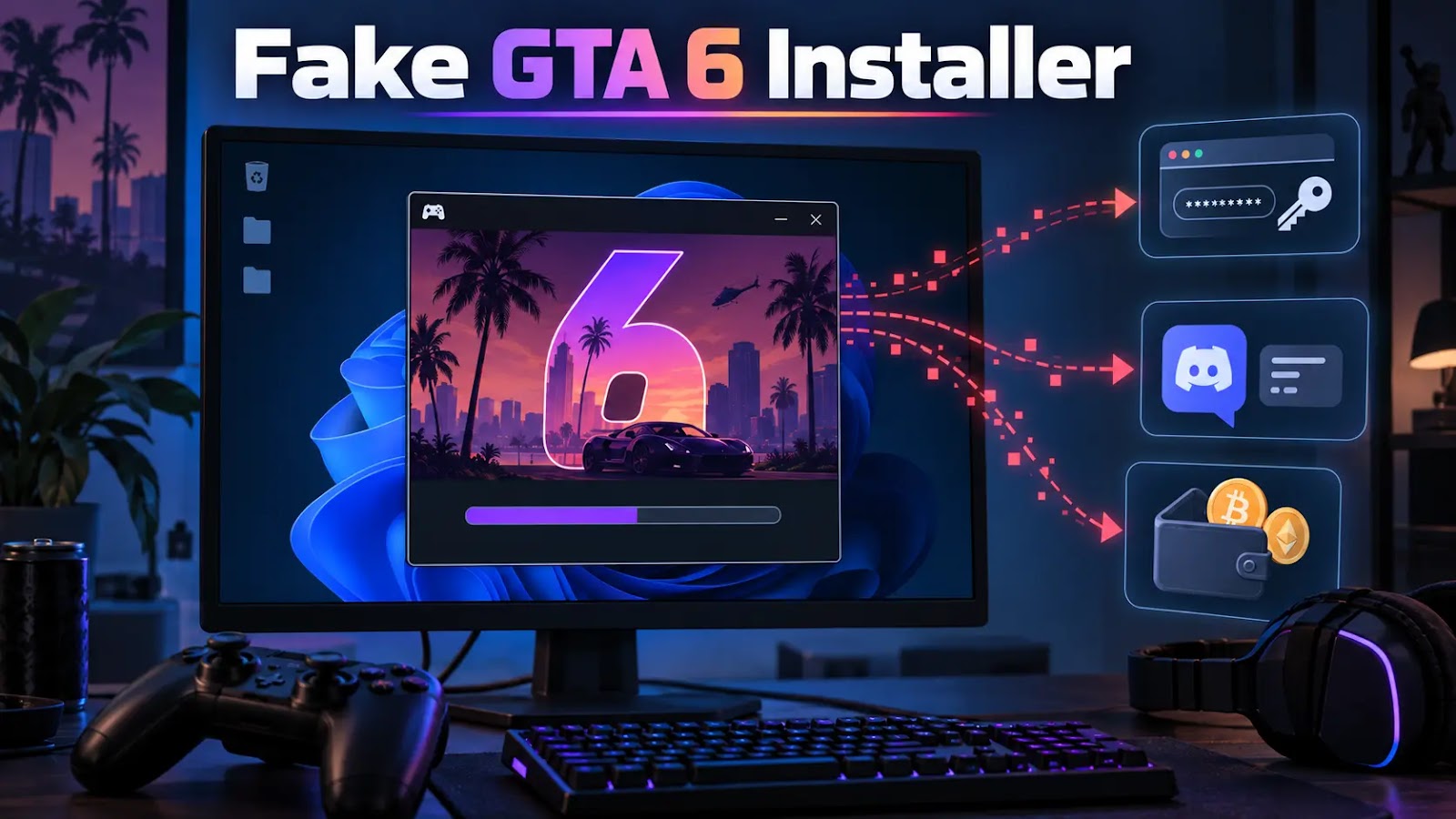
Cybercriminals are capitalising on the buzz surrounding the upcoming Grand Theft Auto VI by distributing counterfeit “leaked” installers that embed a multi‑stage malware suite.
The rogue package, which masquerades as an unofficial pre‑release of Rockstar Games’ long‑awaited title, installs code designed to capture a range of personal data. Security analysts say the payload extracts saved browser credentials, Discord authentication tokens, details of active gaming sessions and information linked to cryptocurrency wallets.
Researchers who first uncovered the scheme noted that the malicious installer appears in file‑sharing forums, social‑media channels and Discord communities where fans trade rumors of early access. Once a user runs the executable, the first stage drops a downloader that fetches additional components, creating a layered infection that can persist across system reboots.
The technique mirrors earlier campaigns that weaponise the hype surrounding high‑profile releases, from popular video games to blockbuster movies. By attaching the malware to a coveted “leak,” attackers increase the likelihood that unwary gamers will bypass security warnings and execute the file.
Industry observers warn that the stolen data can be leveraged for credential‑stuffing attacks, unauthorized purchases, and illicit cryptocurrency transactions. Discord tokens, in particular, give perpetrators access to private conversations, server memberships and potentially paid Nitro subscriptions.
Rockstar Games has not confirmed any direct involvement, but the company routinely advises players to download software only from official storefronts such as the PlayStation Store, Xbox Marketplace or the company’s website. Cybersecurity firms recommend that users verify file hashes, enable two‑factor authentication on accounts, and keep operating systems and security software up to date.
Law‑enforcement agencies in several jurisdictions have opened investigations into the distribution network, though the actors behind the operation remain unidentified. The modular nature of the malware suggests it could be repurposed for future high‑interest releases, raising concerns that similar attacks may surface around other anticipated titles.
Experts stress that vigilance, rather than panic, is the best defence. By scrutinising download sources, avoiding unsolicited links and employing password managers, gamers can reduce the risk of falling victim to this and comparable scams.

Comments (0)
Be the first to comment.
Join the discussion