Brenner Base Tunnel Firm Acknowledges Data Breach Amidst Propaganda Concerns
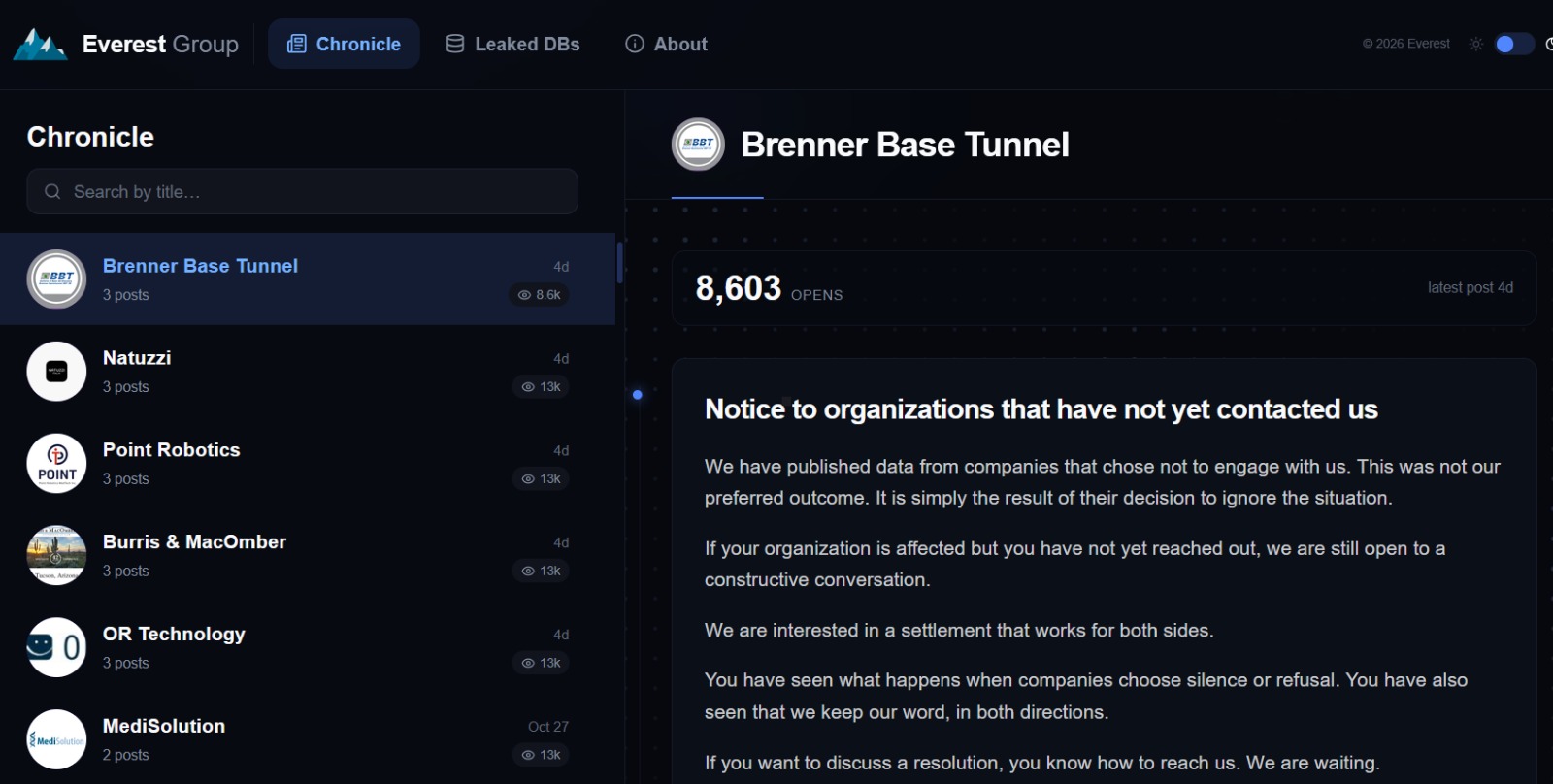
The construction consortium behind the Brenner Base Tunnel (BBT) confirmed on Monday that its subsidiary, Brenner Base Tunnel SE, suffered a cybersecurity breach that exposed a sizable amount of data, a claim echoed by security analyst firm Everest, which estimates the leak to involve roughly 812 gigabytes of information.
According to the company's brief statement, the intrusion was detected during routine network monitoring and was contained before any critical operational systems were compromised. While the exact nature of the stolen files has not been disclosed, officials emphasized that the breach does not appear to affect the tunnel's engineering plans or the safety of ongoing works linking Italy and Austria.
Everest’s assessment, based on traffic analysis and file‑type signatures, suggests that the compromised data set includes internal communications, project schedules, and possibly vendor contracts. The firm warned that the volume of material could be repurposed for disinformation campaigns, especially given the tunnel’s high‑profile status as a flagship European infrastructure project.
Experts caution that the public reaction to the incident may be amplified by groups seeking to sow doubt about trans‑European cooperation. “When a breach is framed as a catastrophic security failure, it feeds narratives that portray EU projects as vulnerable to foreign meddling,” said a cybersecurity researcher unaffiliated with either party. The researcher added that overstating the impact can be more advantageous to propagandists than the actual technical damage.
Authorities are now working with national cyber‑defence agencies to trace the source of the attack and to harden the network against future incursions. Meanwhile, the BBT consortium has pledged to keep stakeholders informed as investigations progress, underscoring that the tunnel’s construction timeline remains unchanged. The incident highlights the growing intersection of critical infrastructure and information warfare, reminding policymakers that transparent communication is essential to prevent panic from being weaponized.

Comments (0)
Be the first to comment.
Join the discussion