Brazilian‑Linked BraZetsu Malware Fuels Underground Market for Corporate Network Access
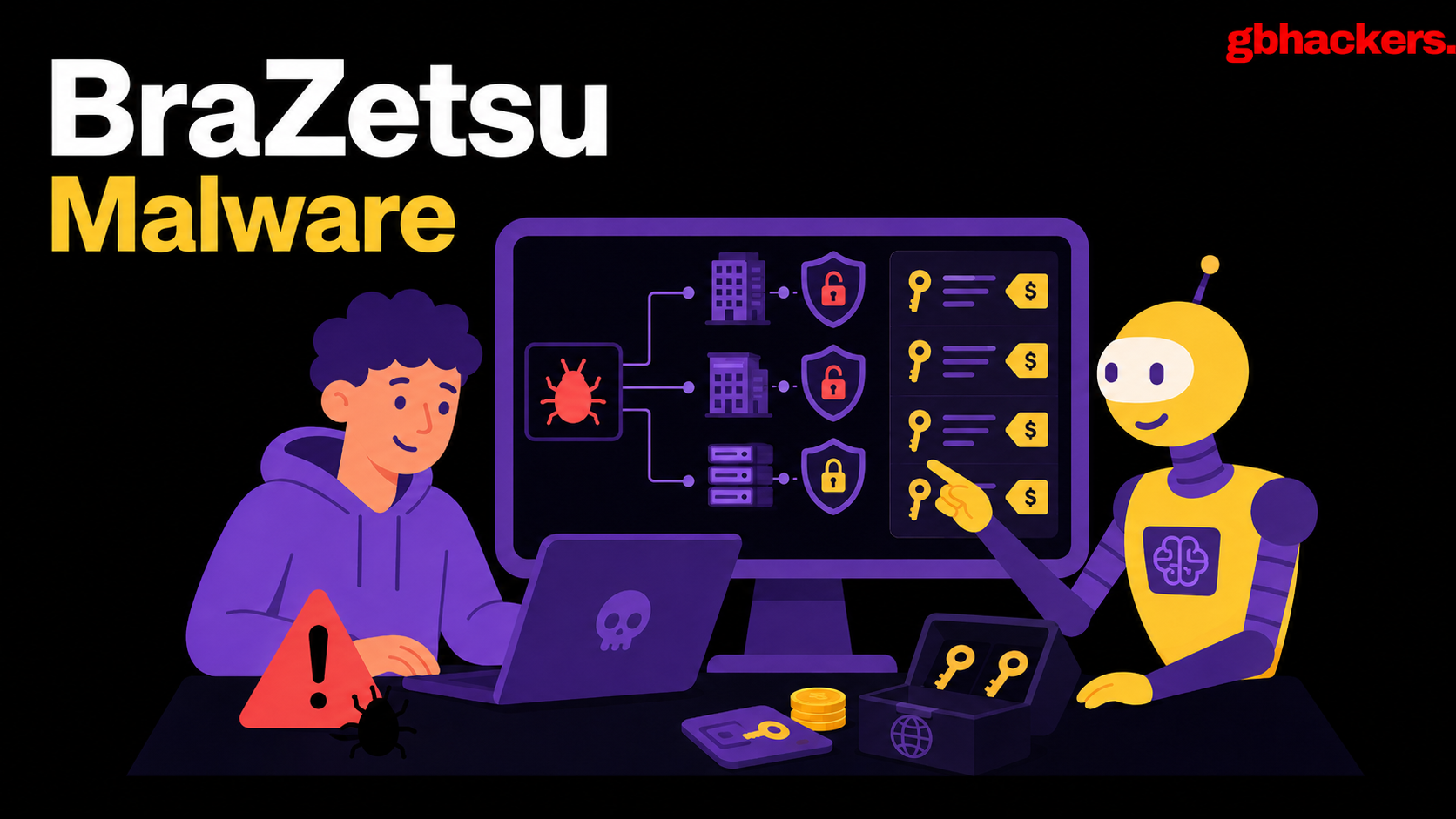
Security researchers have identified a new Python‑based Windows malware framework, dubbed BraZetsu, that appears to be operated by the Brazilian cyber‑crime group Exilware. Unlike typical information‑stealing tools, BraZetsu is engineered to locate, profile and then package compromised corporate environments for resale on underground markets.
The framework conducts a systematic sweep of victim networks, cataloguing active directories, privileged accounts, and internal applications. Once the reconnaissance phase is complete, the gathered data is handed off to a marketplace where threat actors can purchase direct access to the compromised systems. This model mirrors the growing “initial access broker” ecosystem, where the value of a breach is increasingly measured by how quickly it can be transferred to a third‑party buyer.
Analysts say the choice of Python for a Windows‑targeted payload is notable. Python’s cross‑platform nature and extensive library support allow the authors to embed sophisticated evasion techniques while maintaining a relatively small binary footprint. The codebase also includes modules that can dynamically adapt to different network configurations, suggesting a level of modularity designed for rapid customization across multiple victims.
Exilware, a group previously linked to financially motivated attacks in Brazil and South America, has not publicly claimed responsibility for BraZetsu. However, patterns in the malware’s command‑and‑control infrastructure and the linguistic style of its embedded strings align with earlier samples attributed to the group. This continuity points to an expanding operational capability that moves beyond ransomware or credential theft toward a service‑oriented business model.
The emergence of BraZetsu underscores a broader shift in cybercrime economics. As law‑enforcement pressure intensifies on ransomware operators, many criminals are diversifying revenue streams by selling “access as a service.” Buyers range from other hackers seeking a foothold for further exploitation to nation‑state actors looking for quick entry points into strategic enterprises. By monetizing the reconnaissance phase itself, groups like Exilware can extract value even before any additional payload is deployed.
Industry experts warn that organizations may not notice an intrusion until the purchased access is used for a secondary attack, such as data exfiltration or ransomware deployment. Traditional detection tools that focus on known infostealer signatures may miss the more subtle behaviors of a framework designed primarily for profiling and handoff.
Mitigation recommendations include tightening network segmentation, enforcing least‑privilege access, and implementing continuous monitoring of privileged account activity. Security teams are also advised to audit outbound traffic for anomalous connections to known underground marketplaces, as these can serve as early indicators of a BraZetsu‑related compromise.
While the full impact of BraZetsu remains under investigation, its discovery highlights the evolving sophistication of cyber‑crime supply chains. As threat actors refine tools that blend reconnaissance with direct monetization, defenders must adapt by expanding visibility across the entire attack lifecycle, not just its final, more visible stages.



Comments (0)
Be the first to comment.
Join the discussion