Webinar Highlights Rising Threat of Malicious OAuth Apps to Google Workspace Security
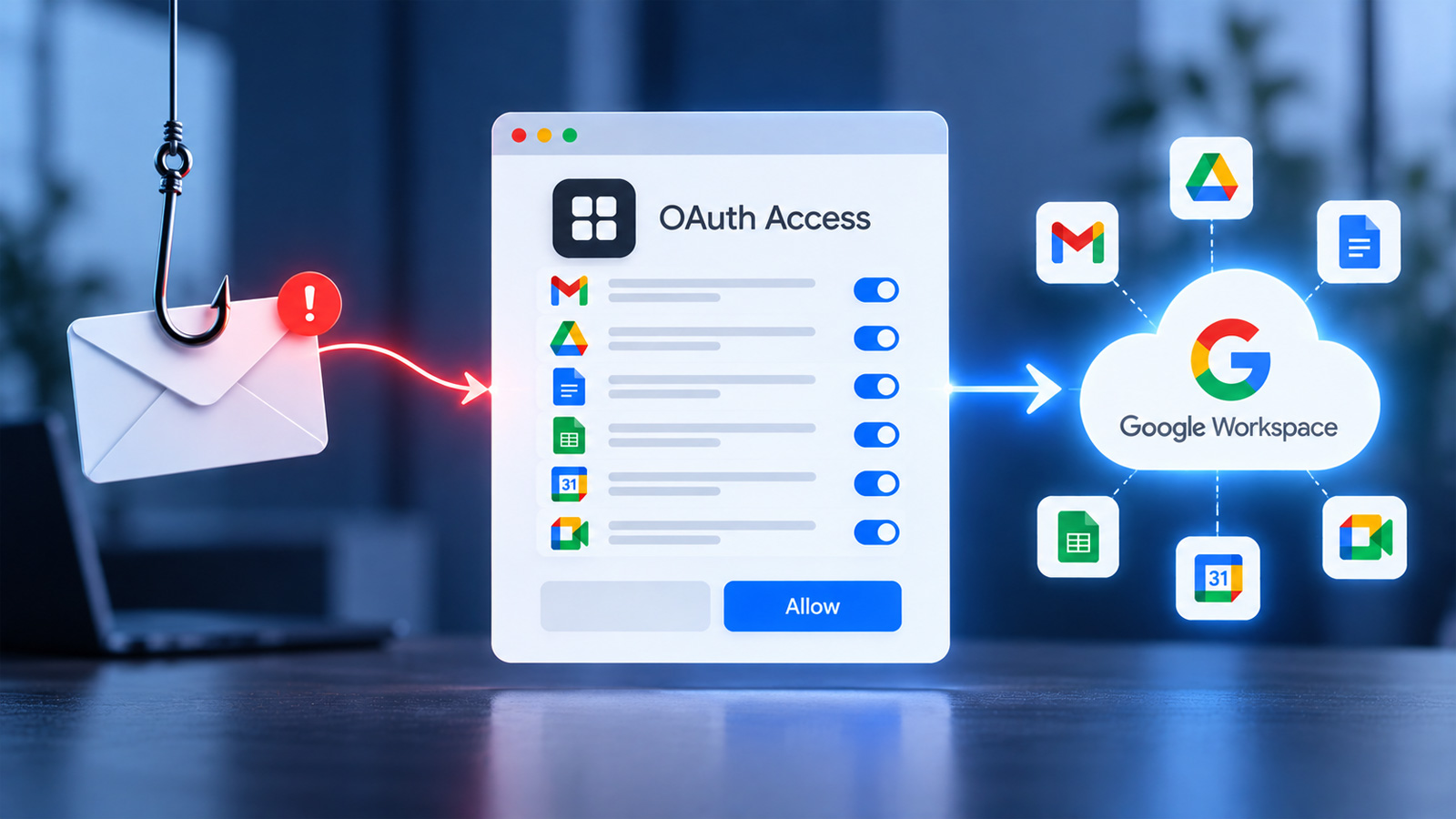
A recent webinar hosted by security experts warned that attackers are increasingly exploiting malicious OAuth applications to infiltrate Google Workspace environments, bypassing traditional password‑based defenses. By coupling deceptive social‑engineering tactics with compromised third‑party apps, threat actors can obtain extensive access to corporate data without ever needing a stolen password.
The presentation examined two detailed case studies in which malicious OAuth apps were used to gain unauthorized entry into organizations' Google Workspace accounts. In each scenario, the attackers first lured employees into granting permissions to a seemingly legitimate third‑party service. Once the consent was given, the malicious app leveraged the OAuth token to act on behalf of the user, pulling emails, documents, and other sensitive information from the compromised tenant.
Security analysts emphasized that these attacks illustrate a shift away from credential‑theft toward token‑theft techniques. OAuth tokens, once issued, can remain valid for weeks or months, providing a persistent foothold if not promptly revoked. Because the authentication flow does not involve the user’s password, conventional password‑policy measures—such as forced resets or multi‑factor authentication—do not automatically block the breach.
To mitigate the risk, the webinar recommended several controls. Administrators are urged to enforce strict OAuth app whitelisting, limiting which third‑party applications can request access to the organization’s data. Regular audits of granted app permissions, combined with automated revocation of unused or high‑risk tokens, were highlighted as essential practices. Additionally, employing security information and event management (SIEM) tools to monitor anomalous OAuth activity can help detect suspicious consent grants early.
Industry observers note that the problem is compounded by the sheer number of apps available in the Google Workspace Marketplace, many of which request broad scopes of access. While Google provides mechanisms such as OAuth token expiration policies and user‑driven consent reviews, the responsibility for diligent oversight ultimately rests with the organization’s IT and security teams.
Looking ahead, the experts anticipate that Google will continue to refine its OAuth security framework, potentially introducing more granular consent prompts and tighter default scopes. In the meantime, organizations are encouraged to adopt a defense‑in‑depth strategy, combining policy enforcement, continuous monitoring, and employee awareness training to reduce the likelihood of OAuth‑based intrusions.


Comments (0)
Be the first to comment.
Join the discussion