CERT/CC Uncovers Chain of Flaws in ViewSonic vCast That Grant Unauthenticated Full Control
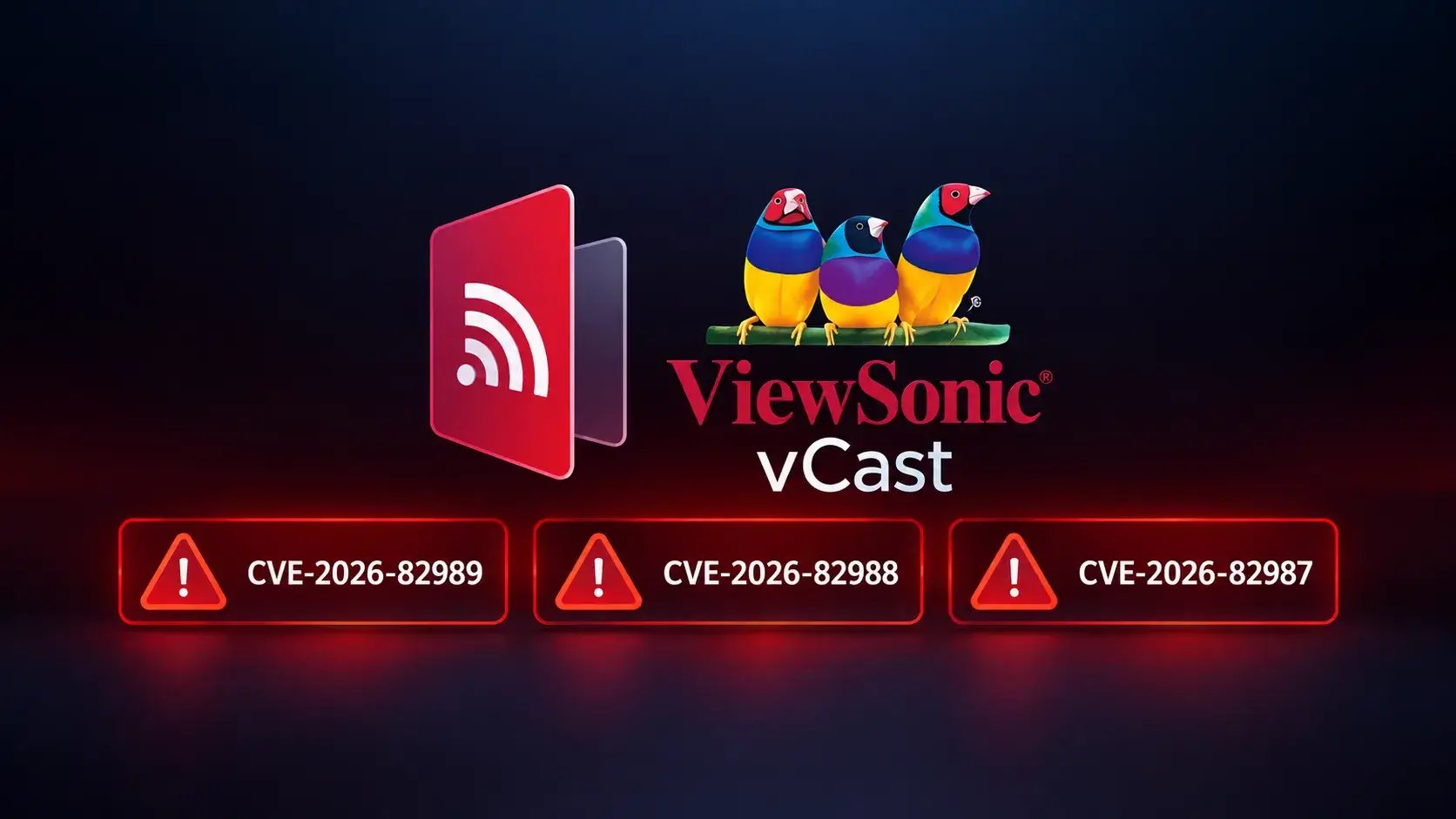
The CERT Coordination Center (CERT/CC) has disclosed a series of three linked vulnerabilities in ViewSonic's vCast software that allow attackers on the same local network to capture screen contents, install malicious Android applications, and ultimately seize complete control of the device without any authentication.
vCast is a streaming and digital‑signage platform widely used in classrooms, corporate lobbies, and public displays to broadcast video, presentations, and interactive content. The software runs on Windows‑based hardware and often integrates Android‑based media players, making it a convenient target for threat actors seeking to exploit both the host system and connected peripherals.
The three flaws form a progression: an initial weakness permits unauthenticated users to request screen data from the host, effectively stealing whatever is being shown. A second vulnerability leverages the same network exposure to push and install arbitrary Android packages onto the attached media player. The final bug escalates privileges, granting the attacker remote code execution capabilities that translate into full administrative control over the entire device. Because each step can be triggered without valid credentials, the attack chain can be executed entirely from a compromised workstation on the same subnet.
Security analysts warn that the impact extends beyond simple visual eavesdropping. Malicious Android apps could be used to exfiltrate data, launch phishing campaigns, or serve as a foothold for broader network infiltration. Full device takeover enables attackers to manipulate displayed content, disrupt operations, or embed persistent backdoors that survive reboot cycles. Organizations that rely on shared Wi‑Fi or Ethernet networks for their signage infrastructure are particularly exposed.
In response, ViewSonic has acknowledged the report and indicated that patches addressing the vulnerabilities are being prepared. The company advises customers to apply any available updates promptly, restrict network access to trusted devices, and consider segmenting signage equipment from critical business systems. CERT/CC has assigned CVE identifiers to each of the three flaws and recommends that administrators monitor for unusual traffic patterns that could signal exploitation attempts.
The disclosure underscores a growing awareness of security gaps in peripheral and display technologies that are often overlooked in traditional IT risk assessments. Similar weaknesses have emerged in competing products, prompting industry groups to call for more rigorous security testing and faster patch cycles for firmware and software that power everyday visual communication tools.
Users can expect the patches to be released within the next few weeks, after which ViewSonic plans to issue detailed remediation guidance. In the interim, experts suggest disabling unnecessary network services on vCast devices, enforcing strong network segmentation, and employing intrusion‑detection systems to flag unauthorized requests for screen data or app installations. Ongoing monitoring of CERT/CC advisories will be essential for organizations that depend on digital signage to stay ahead of emerging threats.



Comments (0)
Be the first to comment.
Join the discussion