Silent Ransom Group Extracts $207 Million from Law Firms Using Phone‑Based Extortion, Not Encryption
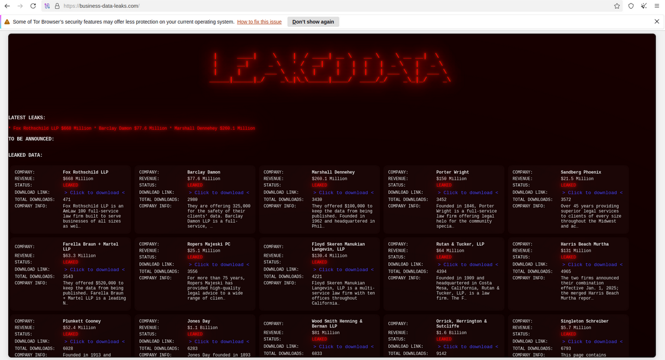
Cyber‑crime investigators say a loosely organized outfit known as Silent Ransom Group has amassed roughly $207 million by targeting 27 law firms over a six‑month period, relying almost exclusively on phone calls and social‑engineering ploys rather than the file‑locking malware typical of ransomware campaigns.
Traditional ransomware attacks usually involve malicious code that encrypts a victim’s data, followed by a demand for payment to restore access. In this case, analysts observed no malicious payloads or encrypted files; instead, perpetrators used persuasive tactics over the phone, threatening to expose or delete sensitive client information unless a payment was made.
According to the investigation, the callers posed as IT support personnel or senior partners, claiming they had discovered a breach or were already in possession of confidential documents. Victims were instructed to transfer funds to cryptocurrency wallets, with the threat of public disclosure or irreversible data loss used as leverage. The scheme capitalized on the high‑stakes nature of legal work, where confidentiality breaches can have severe professional and financial consequences.
Law firms that fell victim reported not only the direct financial loss but also the cost of incident response, client notification, and reputational damage. Many firms operate under strict confidentiality obligations, and the prospect of client data being leaked can trigger regulatory scrutiny and civil liability, amplifying the pressure to comply with the extortion demands.
Law‑enforcement agencies and cybersecurity firms have opened investigations into the operation, urging organizations to verify the identity of anyone requesting access or payment and to adopt multi‑factor authentication for privileged accounts. Experts recommend that firms establish clear protocols for handling unsolicited security calls and that they regularly train staff to recognize social‑engineering cues.
The Silent Ransom case highlights a growing trend where threat actors shift away from technically complex malware toward low‑tech, high‑pressure tactics that exploit human vulnerabilities. As criminals refine these approaches, the legal sector—and other high‑value industries—may need to bolster not only technical defenses but also procedural safeguards to deter future phone‑based extortion attempts.



Comments (0)
Be the first to comment.
Join the discussion