Security Affairs Releases Fourth AI‑Cybersecurity Newsletter Highlighting Global Shifts
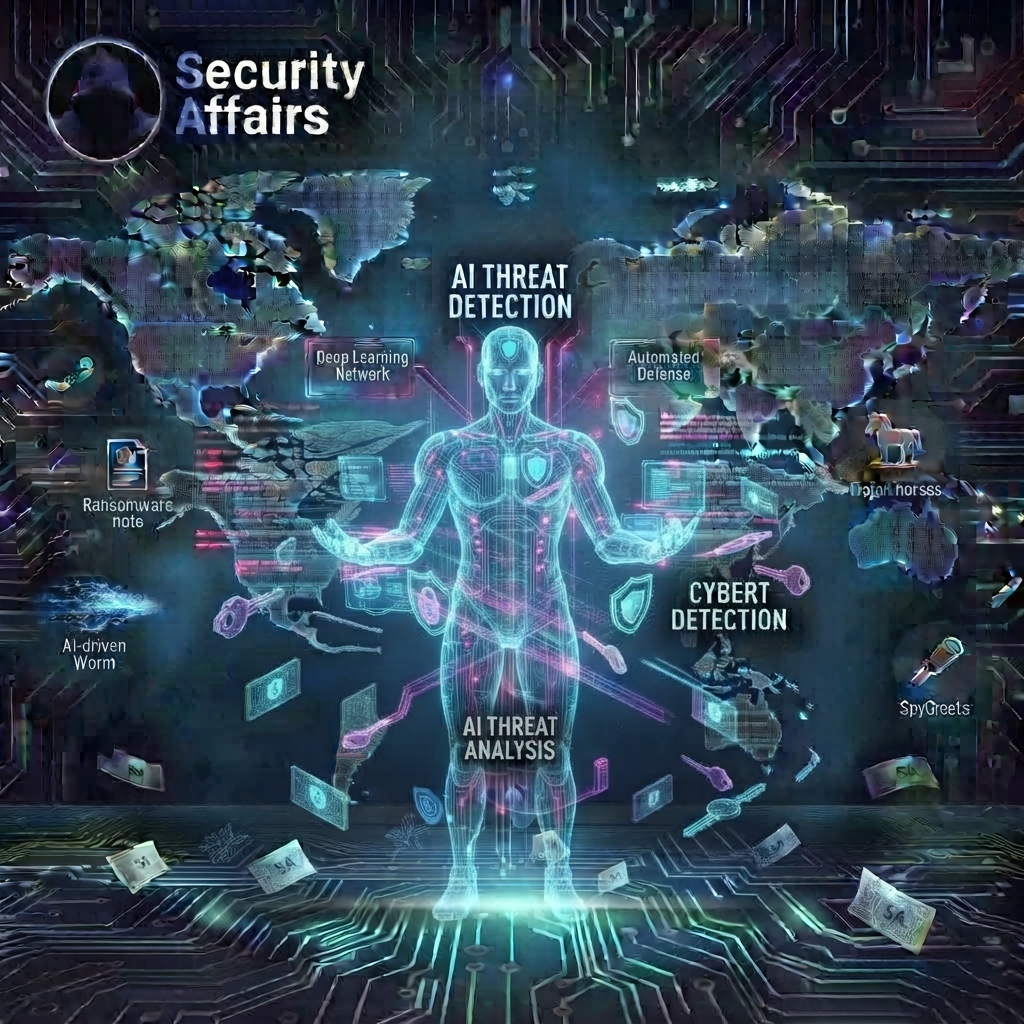
The fourth edition of Security Affairs' AI‑Cybersecurity newsletter has been published, offering readers a curated selection of recent articles and research that examine how artificial intelligence is reshaping the worldwide security landscape.
In the latest issue, the editorial team assembles contributions that trace the accelerating pace at which AI tools are being adopted by both threat actors and defenders. The collection underscores that machine‑learning models are now capable of automating tasks that once required skilled human operators, from crafting convincing phishing messages to scanning for software vulnerabilities at scale.
Analysts featured in the newsletter point to a growing trend where attackers leverage generative AI to produce deep‑fake audio and video, complicating authentication processes and social‑engineering defenses. At the same time, the same technologies are being integrated into security platforms to improve anomaly detection, threat hunting, and incident response, creating a dynamic tug‑of‑war between offense and defense.
Beyond technical developments, the issue also surveys policy discussions emerging in international forums. Experts note that the borderless nature of AI‑driven attacks challenges existing regulatory frameworks, prompting calls for coordinated standards and information‑sharing agreements among nations. The newsletter highlights how governments are beginning to draft guidelines that address the dual‑use nature of AI, seeking to curb malicious applications while encouraging beneficial innovation.
Security Affairs emphasizes that the rapid evolution of AI in cybersecurity is not merely a technical curiosity but a strategic shift with real‑world implications. Enterprises are urged to reassess risk models, incorporate AI‑aware controls, and invest in workforce training to recognize AI‑generated threats. Meanwhile, smaller organizations are reminded that many AI‑enhanced defense tools are becoming accessible through cloud‑based services, potentially leveling the playing field.
Looking ahead, the newsletter anticipates that forthcoming research will delve deeper into the ethical dimensions of AI‑enabled surveillance, the reliability of AI‑based decision‑making under adversarial conditions, and the emergence of hybrid attacks that combine traditional hacking techniques with AI‑generated payloads. Readers are encouraged to follow the series for ongoing insights as the field continues to evolve.
Security Affairs invites security professionals, policymakers, and academics to engage with the curated content, suggesting that collaborative discourse will be essential to navigate the complexities introduced by AI across the cyber domain.


Comments (0)
Be the first to comment.
Join the discussion