Security Affairs Launches Third AI‑Cybersecurity Newsletter Highlighting Global Trends
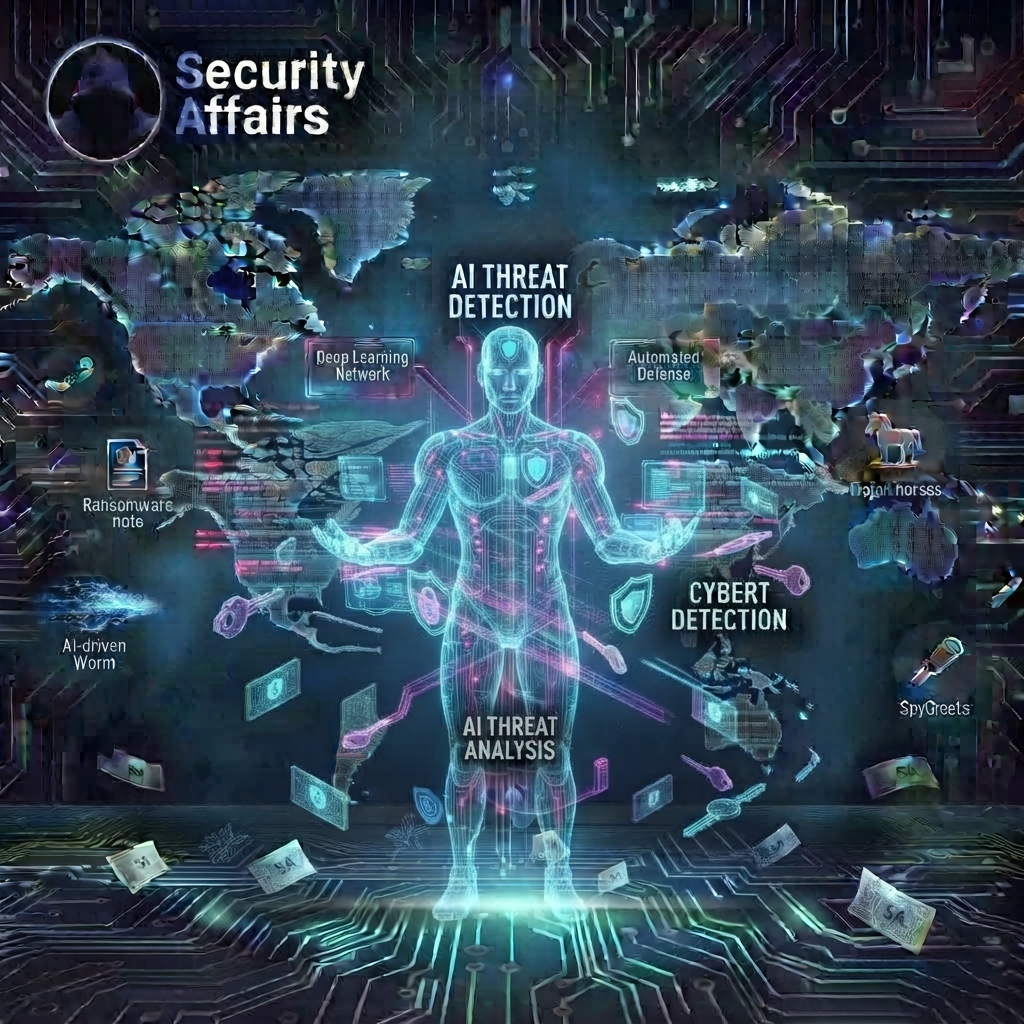
The independent security outlet Security Affairs has published the third edition of its AI‑Cybersecurity newsletter, a curated digest that spotlights the most compelling research and commentary on artificial intelligence’s influence across the international cyber‑threat landscape.
Unlike a typical roundup, the issue assembles contributions from academic labs, industry think‑tanks, and government agencies, offering readers a panoramic view of how AI is being weaponised, defended against, and regulated worldwide. Editors stress that the selection process favours peer‑reviewed studies and investigative reports that demonstrate measurable impact rather than speculative hype.
One of the recurring themes in the newsletter is the accelerating sophistication of adversaries who now exploit generative models to automate phishing, craft convincing deep‑fake audio, and even prototype novel malware payloads. Researchers cited in the issue show that these tools reduce the skill barrier for less‑experienced actors, expanding the pool of potential attackers and forcing defenders to rethink traditional perimeter‑based strategies.
On the defensive side, the newsletter highlights emerging AI‑driven solutions such as behavioural analytics platforms that learn baseline network activity and flag anomalies in real time, as well as automated patch‑management systems that prioritize vulnerabilities based on exploit probability. Several case studies illustrate how machine‑learning models can sift through massive log data to uncover hidden command‑and‑control traffic that would evade signature‑based scanners.
The publication positions itself as a practical resource for security professionals, policy makers, and scholars who must keep pace with a rapidly evolving threat environment. By aggregating hard‑data findings and expert analysis in one place, the newsletter aims to reduce the information overload that often hampers timely decision‑making in both private and public sectors.
Looking ahead, Security Affairs signals that future issues will delve deeper into regulatory responses, ethical considerations of AI‑enabled surveillance, and cross‑border collaboration frameworks. Readers are invited to contribute leads or original research, reinforcing the newsletter’s role as a community‑driven hub for the most pressing AI‑cybersecurity developments.


Comments (0)
Be the first to comment.
Join the discussion