Hackers Claim Breach of Russia's Federal Statistics Office, Alleging Massive Data Theft
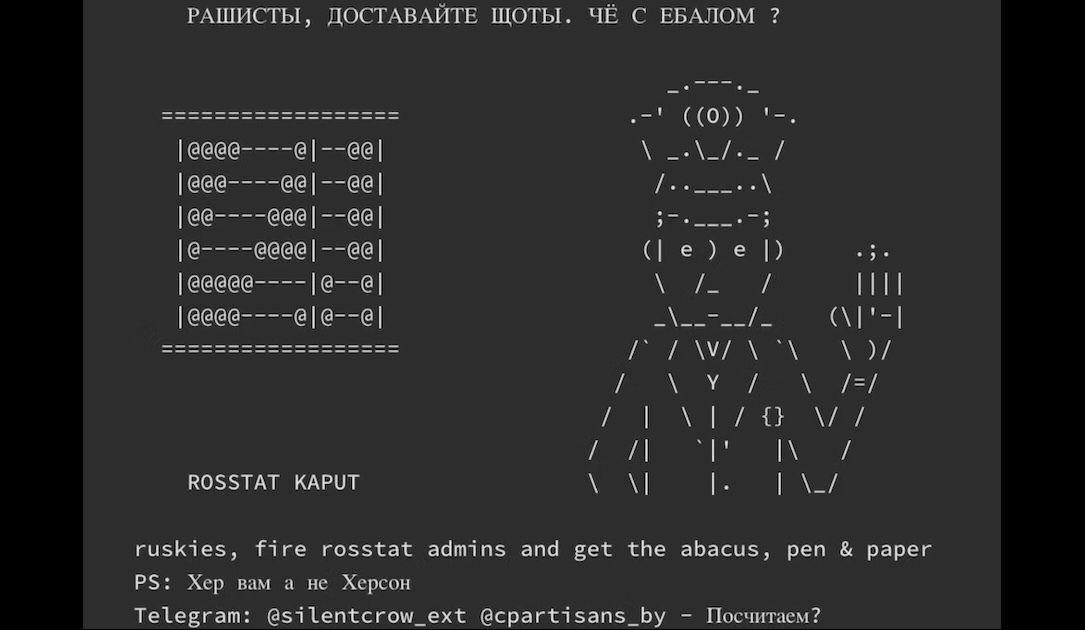
An online collective identifying itself as a partnership between Belarusian and pro‑Ukrainian hackers announced that it had penetrated Rosstat, Russia's federal statistics agency, and exfiltrated a large volume of confidential government information.
The group posted a detailed claim on a public forum, stating that the intrusion disabled the agency's online services and gave the attackers access to internal databases. While the hackers did not release the purported data, they warned that the material could be used to undermine Russian state functions and expose sensitive economic indicators.
Rosstat, responsible for compiling nationwide demographic, economic, and social statistics, is a key source of data for policymakers, businesses, and international observers. A compromise of its systems could affect the reliability of official figures, potentially distorting market expectations and diplomatic assessments that rely on accurate Russian metrics.
Cybersecurity analysts note that the incident fits a broader pattern of state‑linked and politically motivated hacking campaigns targeting Russian infrastructure. Over the past few years, both Belarusian and Ukrainian actors have been implicated in operations aimed at gathering intelligence or disrupting governmental processes, often in response to geopolitical tensions. However, independent verification of the breach remains pending, as Russian officials have not publicly confirmed the attack.
The claim raises questions about the security posture of Russian federal agencies, which have faced scrutiny after earlier incidents involving ransomware and data leaks. Experts suggest that a successful infiltration of Rosstat could indicate gaps in network segmentation, outdated software, or insufficient monitoring—issues that have been highlighted in prior assessments of Russian cyber defenses.
Authorities in Moscow are expected to launch an internal investigation and may coordinate with international partners to trace the source of the intrusion. If the allegations prove accurate, the fallout could include tightened cybersecurity protocols across other ministries, potential sanctions against entities linked to the attackers, and heightened diplomatic rhetoric surrounding cyber warfare in the region.
Meanwhile, the hacker alliance's public boast underscores the growing trend of cyber groups using media releases to amplify the impact of their operations. By claiming responsibility and threatening further exposure, they aim to leverage the breach for political messaging, regardless of the actual scope of the data obtained.



Comments (0)
Be the first to comment.
Join the discussion