Decade-Old PostgreSQL Flaw Enables Server Takeover, Researchers Reveal
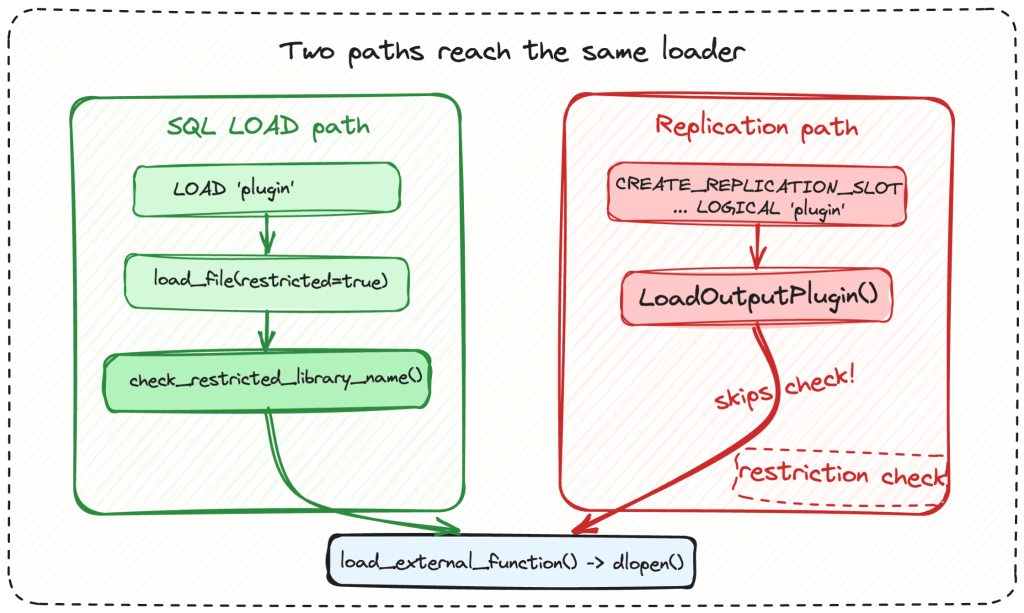
Security researchers at Cyera have uncovered a vulnerability in PostgreSQL that has existed for roughly twelve years, allowing attackers with limited privileges to execute arbitrary code and potentially seize control of vulnerable database servers. The flaw, dubbed PostGREShell, has been cataloged as CVE-2026-6471 and carries a CVSS severity rating of 7.2, indicating a high level of risk.
PostGREShell exploits a long‑standing weakness in PostgreSQL's handling of certain internal operations, enabling a low‑privilege user to trigger code execution pathways that were not intended to be reachable from outside the database engine. Because the vulnerability can be leveraged without requiring administrative credentials, it opens a pathway for attackers to pivot from a compromised database account to full server control, a scenario that can lead to data exfiltration, ransomware deployment, or other malicious activity.
PostgreSQL, an open‑source relational database system, powers a broad spectrum of applications ranging from small web services to large enterprise data warehouses. Its reputation for stability and security makes it a core component in many critical infrastructures. The discovery that a flaw persisted unnoticed for over a decade underscores the challenges of maintaining security in complex, widely deployed software, especially when codebases evolve over many release cycles.
The Cyera team identified the issue through internal security testing and subsequently followed a responsible disclosure process, notifying the PostgreSQL Global Development Group (PGDG) and coordinating a public announcement. While the exact timeline of the vulnerability’s discovery and reporting is not disclosed, the researchers emphasized that the flaw was present in multiple historical releases, meaning that a substantial number of installations could be affected if they have not applied recent updates.
In response, the PostgreSQL maintainers have released patches that address the vulnerability across supported versions. Administrators are urged to apply these updates promptly and to review any systems still running older, unsupported releases that may not receive fixes. The advisory also recommends reviewing database configurations for unnecessary privileges and employing defense‑in‑depth measures such as network segmentation and intrusion detection to mitigate potential exploitation.
The emergence of PostGREShell serves as a reminder of the importance of regular software maintenance and proactive security auditing, particularly for critical infrastructure components. As organizations continue to rely on PostgreSQL for mission‑critical workloads, timely patching and vigilant monitoring will be essential to safeguard against both legacy and newly discovered threats.



Comments (0)
Be the first to comment.
Join the discussion