SETTRA Ransomware Hijacks MeshAgent RMM to Accelerate Windows Encryptions
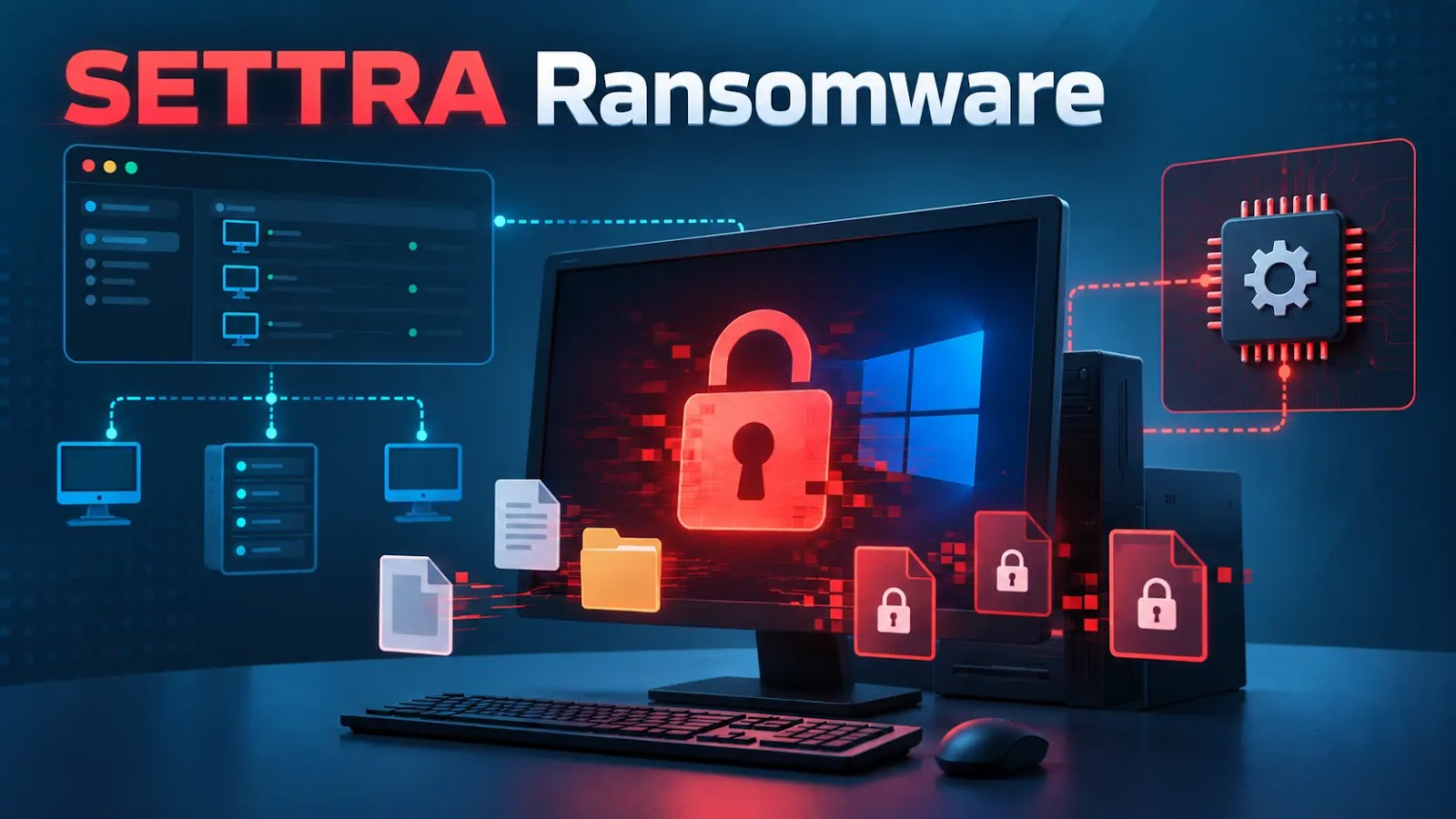
A new ransomware strain identified as SETTRA is leveraging the legitimate MeshAgent remote monitoring and management (RMM) platform to establish persistence on compromised Windows machines before deploying encryption payloads. Security researchers say the abuse of MeshAgent enables the malware to blend in with normal administrative traffic, making detection more challenging.
According to the initial analysis shared by the cybersecurity firm Huntress and originally reported by GBHackers, SETTRA also incorporates a BYOVD (Bring Your Own Vulnerable Driver) technique. By loading a driver that is already present on the target system, the ransomware sidesteps many of the kernel‑level defenses that modern anti‑malware solutions rely on, thereby increasing the likelihood of a successful encryption operation.
The attack chain typically begins with the adversary gaining initial access through phishing or credential theft, after which they deploy MeshAgent to maintain a foothold. Once the RMM tool is installed, SETTRA uses it to download additional components, including the malicious driver and the encryption module. The ransomware then disables system recovery mechanisms such as Volume Shadow Copy Service, limiting victims' ability to restore files without paying a ransom.
Experts note that the combination of persistence via a trusted management tool and the use of a vulnerable driver represents a sophisticated evolution in ransomware tactics. By exploiting legitimate software, attackers can evade behavioral analytics that flag unusual processes, while the driver‑based approach helps them bypass user‑mode security controls.
Industry analysts warn that organizations using MeshAgent should review their deployment configurations, enforce strict access controls, and monitor for anomalous usage patterns. Updating the RMM platform, applying the latest patches, and employing endpoint detection and response (EDR) solutions that can inspect driver loading activities are recommended mitigations.
While the full impact of SETTRA remains under investigation, early reports suggest that affected enterprises have experienced rapid data loss and are forced to negotiate ransom demands. The incident underscores the broader trend of ransomware groups weaponizing legitimate IT tools, prompting security teams to balance operational efficiency with heightened vigilance.
Researchers continue to track SETTRA’s infrastructure and are collaborating with MeshAgent’s developers to develop signatures and remediation guidance. As the threat landscape evolves, the hope is that proactive threat hunting and tighter control of remote management utilities will blunt the effectiveness of such hybrid ransomware campaigns.


Comments (0)
Be the first to comment.
Join the discussion