Researchers Uncover 2CLoader Malware Leveraging Anti‑VM Tricks to Deploy Multiple Stealers
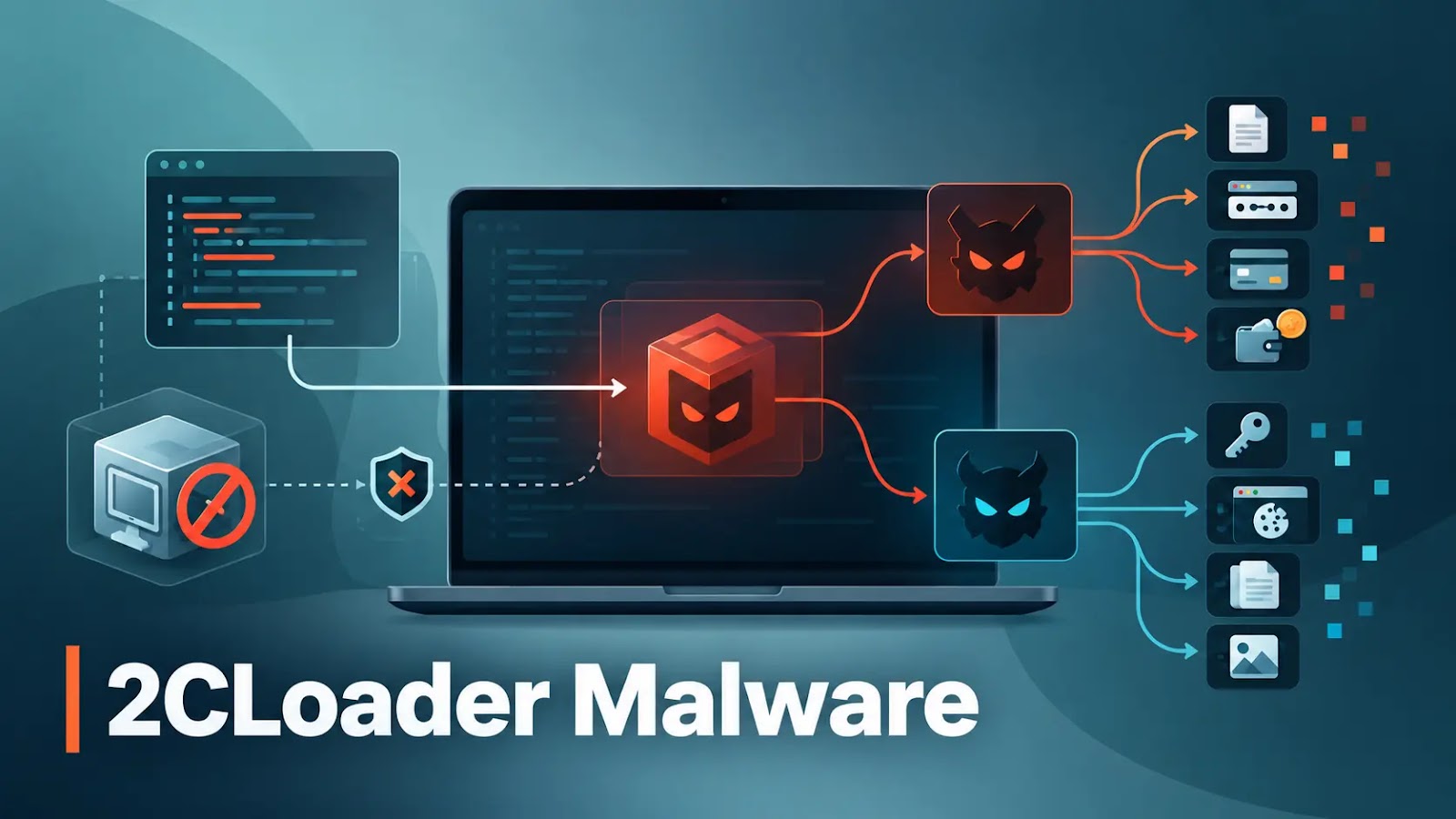
Security analysts have identified a new Windows‑focused malware loader, dubbed 2CLoader, that employs a suite of evasion tactics before unleashing two well‑known information‑stealing families, Vidar and Remus, as well as the XWorm remote‑access trojan.
The loader’s codebase incorporates extensive anti‑analysis measures, including checks for virtual‑machine environments, indirect system‑call routing, and runtime API manipulation. By tampering with standard Windows functions and executing payloads entirely in memory, 2CLoader seeks to avoid detection by conventional sandbox and signature‑based tools.
Once the evasion stage is cleared, 2CLoader drops the Vidar and Remus stealers, both of which are designed to harvest credentials, browser histories, cryptocurrency wallets and other personal data from compromised machines. In addition, researchers observed instances where the loader also delivered the XWorm RAT, expanding the threat’s capabilities to include full remote control of infected hosts.
Modular loaders such as 2CLoader have become increasingly common in recent years, allowing threat actors to reuse a single delivery mechanism while swapping out payloads to suit specific campaigns. The inclusion of indirect system calls and API hooking reflects a broader trend toward more sophisticated obfuscation techniques that frustrate static analysis and automated detection.
While the precise infection vectors remain under investigation, the presence of 2CLoader in multiple threat‑intel feeds suggests it is being circulated through typical distribution channels like malicious email attachments, compromised software bundles, or exploit‑kit drops. Victims are likely to experience data exfiltration and, in cases where XWorm is deployed, potential espionage or ransomware escalation.
Experts advise organizations to maintain up‑to‑date endpoint protection, enforce strict application whitelisting, and monitor for anomalous API calls that could indicate in‑memory execution. Ongoing research will focus on mapping the loader’s command‑and‑control infrastructure and developing signatures that can flag its distinctive anti‑VM checks.



Comments (0)
Be the first to comment.
Join the discussion