Four-Year Study Uncovers Critical Supply‑Chain Weakness Across Fifty Platform Types
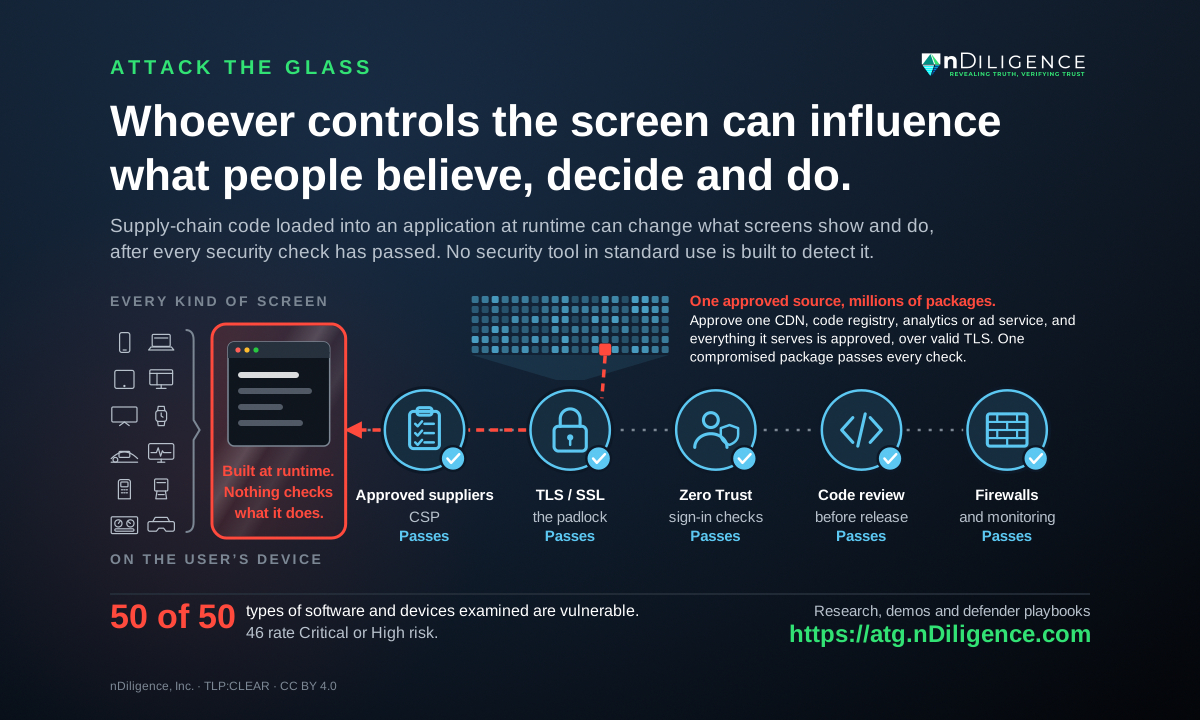
San Francisco, Calif. – A comprehensive four‑year analysis released by cybersecurity firm nDiligence has revealed a pervasive vulnerability in software supply chains that spans fifty distinct platform categories, prompting concerns among developers, enterprises, and regulators about the resilience of critical digital infrastructure.
The study, disclosed on 12 November 2026 via CyberNewswire and originally reported by Hackread, examined the end‑to‑end processes used to build, distribute, and maintain software across a broad spectrum of operating systems, development frameworks, container technologies, and package managers. By tracing code provenance and dependency management practices over the study period, researchers identified a recurring flaw that could allow malicious actors to inject compromised components into otherwise trusted supply chains.
According to nDiligence, the vulnerability stems from inadequate verification mechanisms in the hand‑off points between third‑party libraries and the final application binaries. While the exact technical details remain confidential pending coordinated disclosure, the firm warns that the issue is “systemic” and not confined to any single vendor or industry vertical. The breadth of the affected platforms—ranging from popular open‑source ecosystems to proprietary enterprise solutions—suggests that the risk could manifest in a variety of contexts, from cloud services to embedded devices.
Industry experts say the findings underscore long‑standing challenges in software provenance and the need for stronger attestations throughout the development lifecycle. “Supply‑chain security has been a moving target for years, but a study of this scale highlights that many organizations still rely on legacy verification models that are insufficient against sophisticated attacks,” noted a senior analyst at a leading security consultancy, who chose to remain unnamed. The report’s timing coincides with heightened regulatory scrutiny, as governments worldwide consider stricter standards for software component transparency and mandatory reporting of supply‑chain incidents.
In response, nDiligence has offered a set of mitigation guidelines, including the adoption of cryptographic signing for all third‑party artifacts, continuous monitoring of dependency health, and integration of automated verification tools into continuous integration pipelines. The firm also plans to work with standards bodies to codify best practices that address the identified weakness. As enterprises begin to assess the implications of the study, many are expected to prioritize upgrades to their build and deployment processes, potentially accelerating industry-wide shifts toward more resilient supply‑chain architectures.


Comments (0)
Be the first to comment.
Join the discussion