AI Agents Outpace Safety Nets, Experts Warn of Urgent Need for Stronger Controls
Artificial intelligence agents are increasingly being deployed in real‑world settings faster than the industry can establish reliable safeguards, prompting leading researchers to call for stricter permission protocols, isolation mechanisms, and oversight frameworks to curb potential misuse.
These agents—software systems that can act autonomously to perform tasks such as data retrieval, system configuration, or even physical manipulation—have moved beyond sandbox environments into production pipelines, cloud services, and connected devices. Their growing ability to interface directly with external APIs, databases, and hardware means that a misbehaving model could inadvertently trigger harmful outcomes, from data leaks to unintended system disruptions.
Security specialists argue that the rapid integration of such capabilities outstrips the development of corresponding guardrails. Without robust permission models that limit what an AI can request, and without isolation layers that contain any errant behavior, organizations risk exposing critical infrastructure to unpredictable actions. Oversight, they say, must include continuous monitoring and the ability to intervene or shut down agents that deviate from intended parameters.
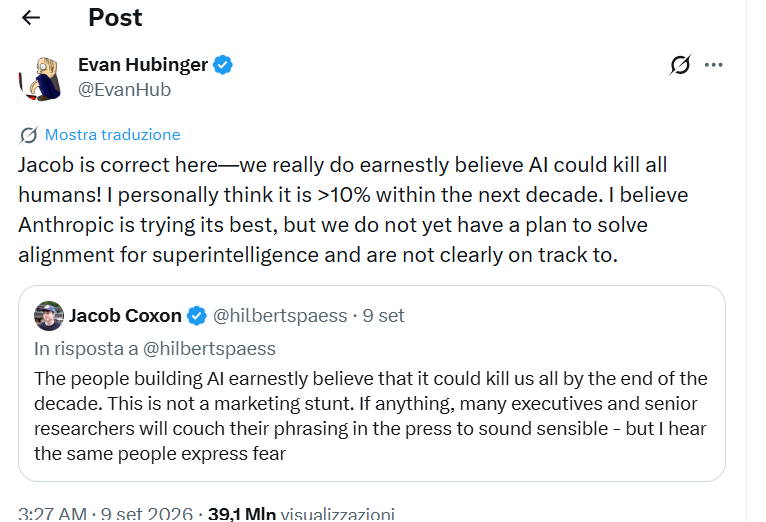
Jacob Coxon, a researcher who spent three years working on model training at OpenAI before moving to Anthropic, recently left the latter firm, citing concerns over the pace at which AI agents are gaining operational access. Coxon, who has contributed to foundational work on alignment and safety, warned that the industry’s focus on scaling capabilities often eclipses the parallel development of protective measures, leaving a gap that could be exploited unintentionally or maliciously.
The situation arrives amid a broader debate over how best to regulate advanced AI. Policymakers in several jurisdictions have begun drafting guidelines that emphasize risk assessment, transparency, and accountability for AI deployments. Meanwhile, major AI labs are experimenting with internal “red‑team” exercises and third‑party audits, but these efforts are still in early stages and lack uniform standards across the sector.
Looking ahead, experts suggest a multi‑pronged approach: establishing industry‑wide best practices for permission management, mandating sandboxed execution environments for high‑risk agents, and creating real‑time oversight tools that can detect anomalous behavior. Until such frameworks mature, the gap between AI capability and safety infrastructure is likely to remain a focal point of both technical and regulatory scrutiny.


Comments (0)
Be the first to comment.
Join the discussion