Leaked Messages Reveal Russian Crime Ring Deploying ‘Agents’ Inside U.S. Law Firms
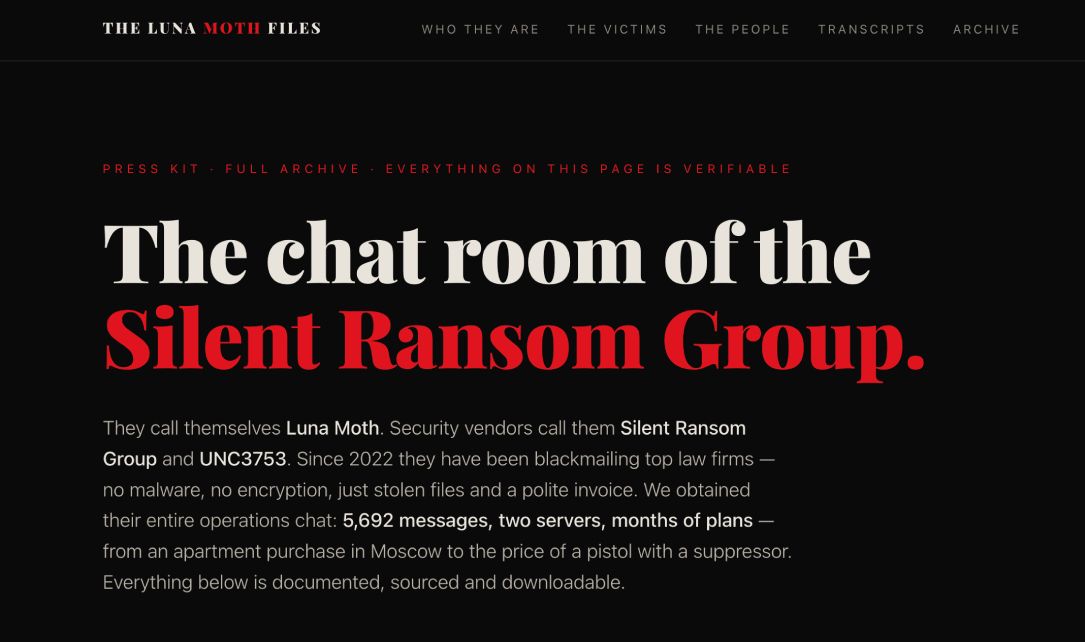
A cache of internal chat logs obtained by a New York‑based publication shows members of a Russian extortion network coordinating the placement of operatives inside American law firms while simultaneously tracking dozens of targeted companies for ransom payments.
The transcripts, which span several months, detail how the group assigns individuals they refer to as “agents” to infiltrate client-facing practices, gather confidential documents, and pressure firms into paying settlements that run into the millions of dollars. The chats also record negotiations over the amounts to be demanded, with participants debating whether to accept partial payments or push for larger sums.
According to the source, the gang maintains a spreadsheet‑style ledger within the chats, listing each victim, the stage of the extortion attempt, and the status of any payment. Some entries note that law firms were contacted directly by the operatives, who posed as disgruntled employees or external consultants, while others indicate that the criminals leveraged compromised email accounts to send threatening messages.
Lawyers and cybersecurity experts say the tactic marks an escalation from the typical ransomware attacks that target corporate networks. By embedding “agents” inside legal practices, the criminals gain access to privileged information that can be weaponized for blackmail or used to amplify the perceived threat of a data breach. “When a law firm holds sensitive client data, the stakes are inherently higher,” said a partner at a major U.S. firm who asked to remain anonymous. “An extortionist who can claim they have that data inside the firm’s own walls can extract far more than a standard ransomware group.”
The revelations come amid heightened scrutiny of Russian‑linked cybercrime groups following a series of high‑profile attacks on critical infrastructure and financial institutions. U.S. law enforcement agencies have previously linked similar extortion schemes to actors operating out of Russian-speaking regions, but the explicit coordination of on‑the‑ground operatives inside U.S. firms adds a new layer of complexity to the threat landscape.
Legal industry associations are urging firms to review their internal security protocols, conduct thorough background checks on staff with access to confidential matters, and adopt multi‑factor authentication for all communications. Meanwhile, investigators are reportedly pursuing the individuals identified in the chats, seeking to determine whether the “agents” are foreign nationals or local collaborators recruited by the Russian syndicate. The ongoing probe underscores the growing challenge of confronting transnational cyber‑criminal enterprises that blend digital intrusion with human infiltration.



Comments (0)
Be the first to comment.
Join the discussion