Researchers Decompile V8-Embedded Crypto Stealer JSCeal, Uncover Advanced Theft Functions
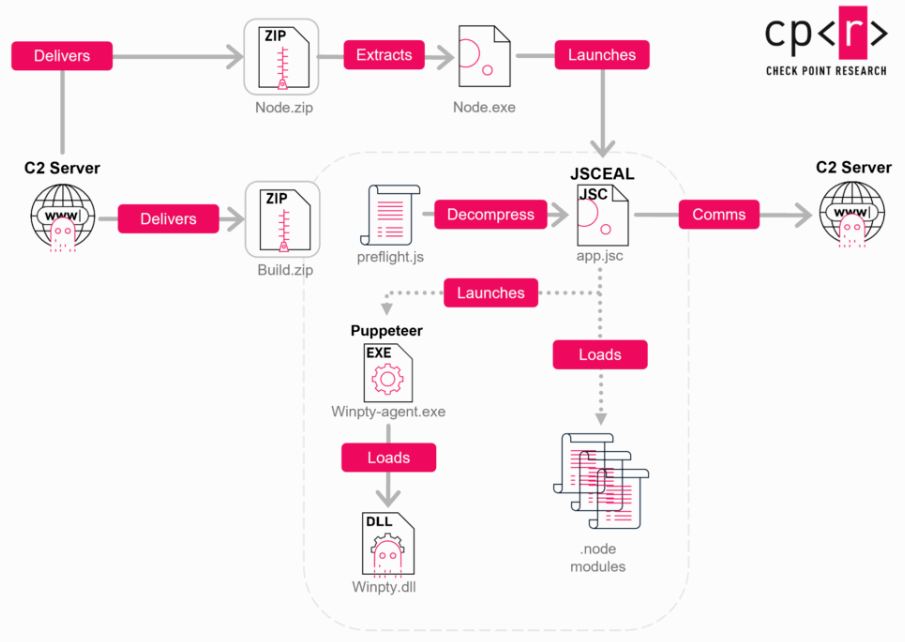
Security analysts have successfully reverse‑engineered a new cryptocurrency‑stealing program known as JSCeal, revealing that the malware conceals its malicious code inside V8 bytecode – the low‑level format used by Google Chrome and Node.js to run JavaScript more efficiently.
Check Point Research first identified JSCeal in early 2025 and has been monitoring its evolution ever since. The strain follows the typical pattern of crypto‑stealers: it seeks out wallet files, private keys and authentication tokens, then transmits the harvested data to remote command‑and‑control servers for illicit conversion.
What sets JSCeal apart is its use of V8 bytecode as a hiding place. While most JavaScript‑based malware remains in plain source files that can be scanned by conventional antivirus engines, JSCeal compiles its payload into the binary bytecode that the V8 engine normally generates for legitimate scripts. This approach thwarts many static‑analysis tools that expect readable JavaScript, allowing the malicious code to slip past standard defenses.
To counter this technique, researchers built a dedicated decompiler that translates V8 bytecode back into a human‑readable form. The tool reconstructs the original logic, exposing the hidden routines that perform credential harvesting, clipboard monitoring, and network interception. By making the bytecode visible, the decompiler enables security products to generate accurate signatures and behavioral rules.
The decompiled code shows that JSCeal is capable of injecting scripts into active browser sessions, capturing clipboard contents that often contain cryptocurrency addresses, and silently contacting remote servers to exfiltrate private keys. It also employs dynamic obfuscation, periodically rewriting its own bytecode to avoid detection by heuristic scanners.
Security experts say the discovery underscores the need for layered protection. Keeping browsers and JavaScript runtimes up to date, employing reputable endpoint detection platforms, and monitoring cryptocurrency wallets for unexpected activity are recommended mitigations. Organizations that rely on web‑based applications should also consider restricting the execution of unsigned scripts.
Analysts anticipate that the bytecode‑hiding method may inspire other threat actors, prompting a new wave of malware that blends performance‑oriented compilation with stealth. Ongoing research and rapid sharing of decompilation tools will be critical to stay ahead of such developments and protect users from the growing financial impact of crypto‑focused attacks.



Comments (0)
Be the first to comment.
Join the discussion