IndiaHost Hit by 300 Gbps DDoS Attack on August 1, Infrastructure Recovers After 35-Second Disruption
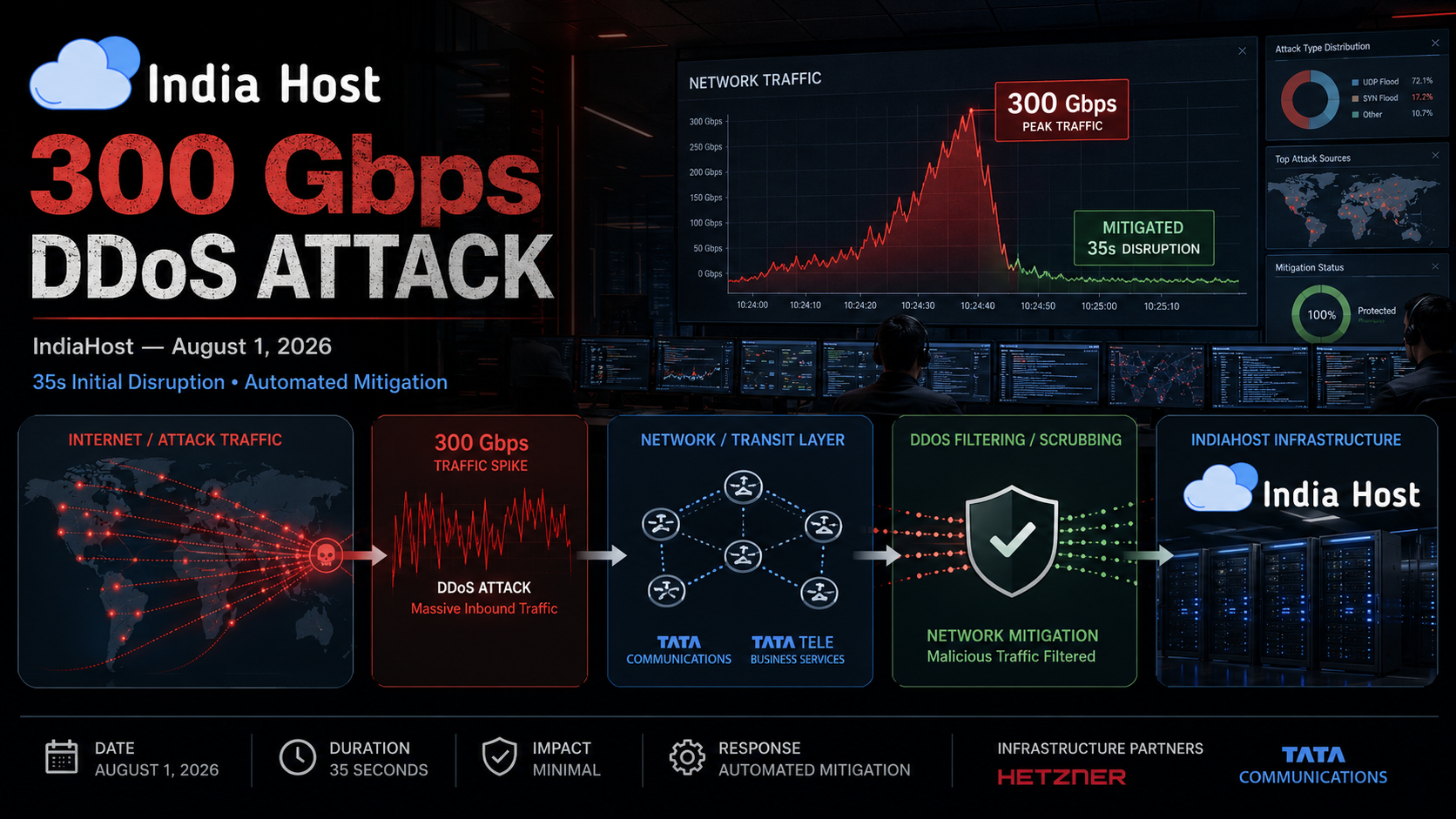
IndiaHost experienced a large-scale distributed denial-of-service (DDoS) attack on August 1, with traffic reaching approximately 300 Gbps at its peak, according to infrastructure telemetry and notification received from its upstream infrastructure provider.
The incident began at approximately 5:23 PM and resulted in a temporary loss of responsiveness across the affected infrastructure. The initial impact lasted approximately 35 seconds before traffic controls and network-level filtering began reducing the attack volume.
300 Gbps Traffic Spike
The attack generated an unusually high volume of inbound traffic toward the affected IndiaHost infrastructure. According to the infrastructure notification received during the incident, the traffic peak reached approximately 300 Gbps at the router and colocation environment.
The sudden traffic increase overwhelmed normal network capacity for a short period, resulting in approximately 35 seconds of degraded responsiveness. The incident was not caused by a conventional application-level failure; the primary impact came from the volume of unsolicited network traffic reaching the infrastructure.
Firewall Controls Begin Filtering Traffic
Following the initial traffic spike, automated network controls began dropping traffic that exceeded the configured threshold. Traffic above approximately 500 Mbps was progressively filtered for the following 30 minutes while the attack continued.
The filtering significantly reduced the amount of malicious traffic reaching the underlying services and allowed the affected infrastructure to return to normal operating conditions. The mitigation process operated without requiring the affected servers to be manually rebuilt or taken offline.
Upstream Infrastructure Provider Detected the Event
The scale of the traffic was also visible at the upstream infrastructure level. IndiaHost received an infrastructure notification indicating that the router and colocated environment had observed traffic volumes reaching approximately 300 Gbps during the incident.
This type of upstream visibility is important during large DDoS events because traffic can saturate network equipment or upstream links before it reaches individual servers. Detecting the event at the network layer allows filtering and mitigation to be applied before the majority of the unwanted traffic reaches the application infrastructure.
Short Service Impact
The attack produced a short period of service unresponsiveness, with the initial disruption lasting approximately 35 seconds. After the traffic controls took effect, the infrastructure remained operational while elevated traffic continued to be filtered.
The incident demonstrates the difference between a temporary network saturation event and a sustained infrastructure failure. Although the initial traffic volume caused a brief disruption, the subsequent filtering prevented the attack from continuing to overwhelm the affected services.
Why 300 Gbps Matters
A 300 Gbps DDoS event represents a substantial volume of network traffic. At this scale, mitigation is not limited to blocking individual IP addresses. Network-level traffic classification, rate limiting and upstream filtering become important because the volume itself can consume available bandwidth and overwhelm network equipment.
For hosting providers, the challenge is particularly significant because a single infrastructure endpoint may be carrying traffic for multiple independent customers. Effective mitigation therefore needs to reduce attack traffic while preserving legitimate connections to the services operating behind the affected network.
IndiaHost Continues Monitoring the Infrastructure
Following the incident, IndiaHost continued monitoring the affected infrastructure and network traffic patterns. The filtering rules remained in place while elevated traffic levels persisted and were used to prevent another immediate saturation of the network.
The event has also provided additional operational data for reviewing network thresholds, automated filtering policies and DDoS response procedures. IndiaHost is continuing to evaluate its mitigation configuration as part of its ongoing infrastructure security operations.
DDoS attacks remain an ongoing operational risk for internet-facing infrastructure, particularly for hosting providers and platforms that expose large numbers of services to the public internet. The August 1 incident provides another example of why network-level monitoring and automated traffic mitigation are important components of modern hosting infrastructure.



Comments (0)
Be the first to comment.
Join the discussion