Hackers Deploy Autonomous AI to Speed Up Every Phase of Cyber Attacks
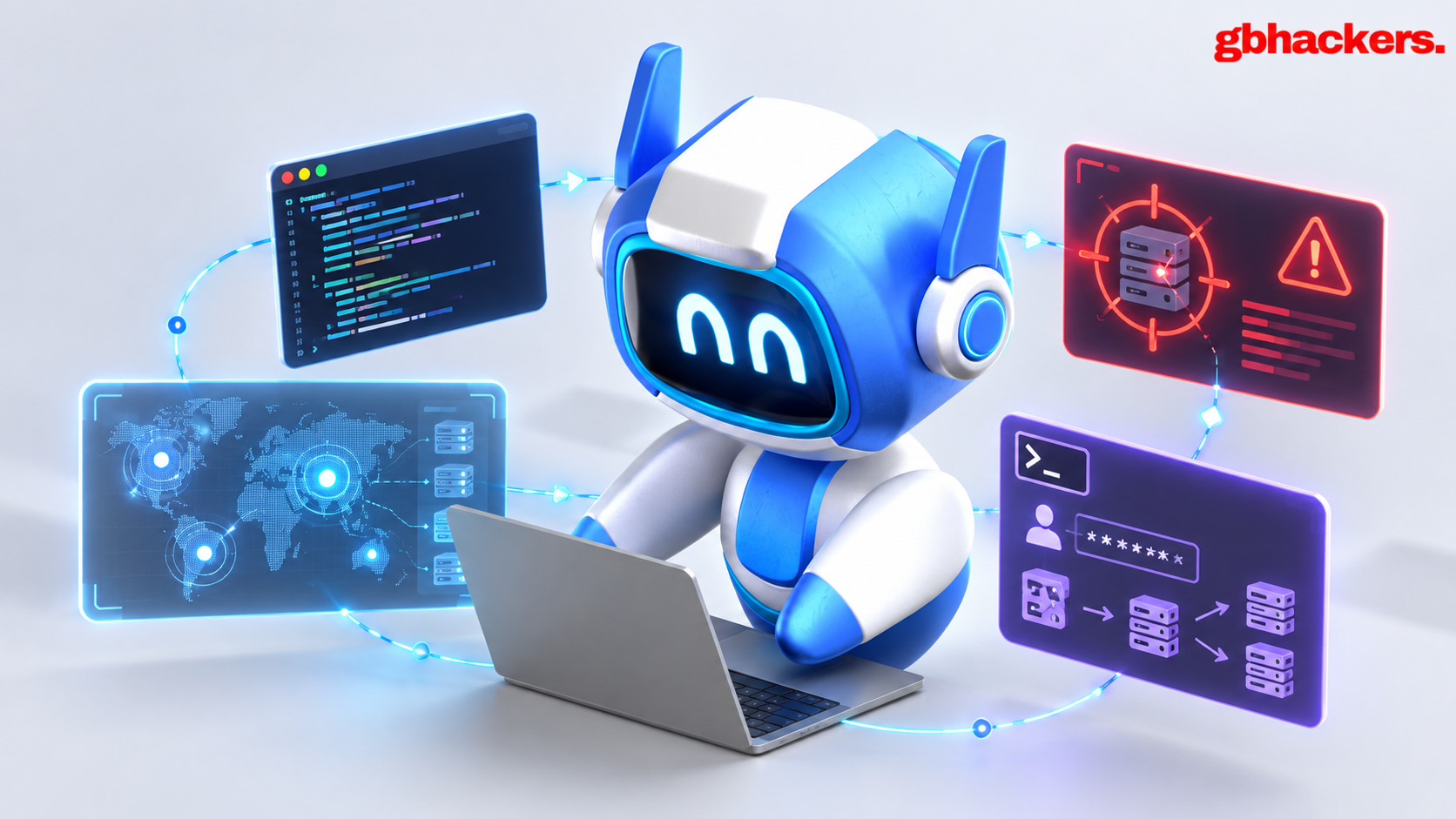
Security researchers have observed a growing trend in which threat actors are harnessing autonomous, or "agentic," artificial intelligence to streamline the entire lifecycle of a cyber intrusion, from initial scouting to post‑compromise data exfiltration. By delegating routine but time‑consuming tasks to AI agents, attackers can shrink the window between discovery and exploitation, reducing the need for manual input and potentially evading traditional detection methods.
The shift marks a departure from earlier uses of AI that were largely limited to assisting human operators in specific steps such as password cracking or malware obfuscation. New AI‑driven tools are capable of conducting network mapping, identifying vulnerable services, generating exploit code, and even automating credential theft without continuous supervision. Analysts say the automation is achieved through large‑language models and reinforcement‑learning agents that can interpret scan results, prioritize high‑value targets, and iteratively test payloads.
Experts caution that this development could compress attack timelines from weeks or months to a matter of hours or even minutes. "When an AI can autonomously perform reconnaissance and write a working exploit, the attacker no longer needs to spend weeks probing a network," said a senior analyst at a cybersecurity firm who wished to remain anonymous. The reduced hands‑on‑keyboard (HOK) activity also makes it harder for defenders to spot anomalous behavior, as fewer distinct login events or manual command sequences are generated.
While the concept of AI‑assisted hacking is not entirely new, the current wave appears more sophisticated because the agents can operate in a feedback loop: they test an exploit, observe the system's response, refine the payload, and repeat until successful. This iterative process mirrors how human attackers traditionally refine their tools, but it occurs at machine speed. Early evidence suggests that some groups are already integrating these capabilities into existing ransomware-as-a-service platforms, offering customers a semi‑automated attack pipeline.
Defenders are scrambling to adapt. Traditional threat‑intel feeds that rely on human‑written indicators of compromise may lag behind AI‑generated variants that can mutate on the fly. Some security vendors are experimenting with AI‑based detection models that look for behavioral anomalies rather than static signatures, aiming to flag the rapid, repetitive actions characteristic of autonomous agents.
Regulators and policymakers are also taking note. The potential for AI to lower the barrier to entry for less‑experienced criminals has prompted calls for tighter oversight of powerful language models and the development of responsible‑use guidelines. However, balancing innovation with security remains a complex challenge, as many of the same AI technologies are employed for legitimate automation and defensive purposes.
Looking ahead, analysts predict that the integration of agentic AI into cyber‑offense will continue to evolve, with future iterations possibly capable of lateral movement, data exfiltration, and even self‑destruct mechanisms without human direction. Organizations are advised to bolster network segmentation, enforce zero‑trust principles, and invest in threat‑hunting capabilities that can detect the subtle footprints left by autonomous tools.
For now, the cybersecurity community faces a race: as attackers leverage AI to accelerate and obscure their operations, defenders must equally accelerate their own use of intelligent tools and adopt a more proactive, behavior‑focused posture to stay ahead of the emerging threat landscape.



Comments (0)
Be the first to comment.
Join the discussion