Hackers Exploit Microsoft Teams to Masquerade as IT Help Desk in Widespread Spring Ring Campaign
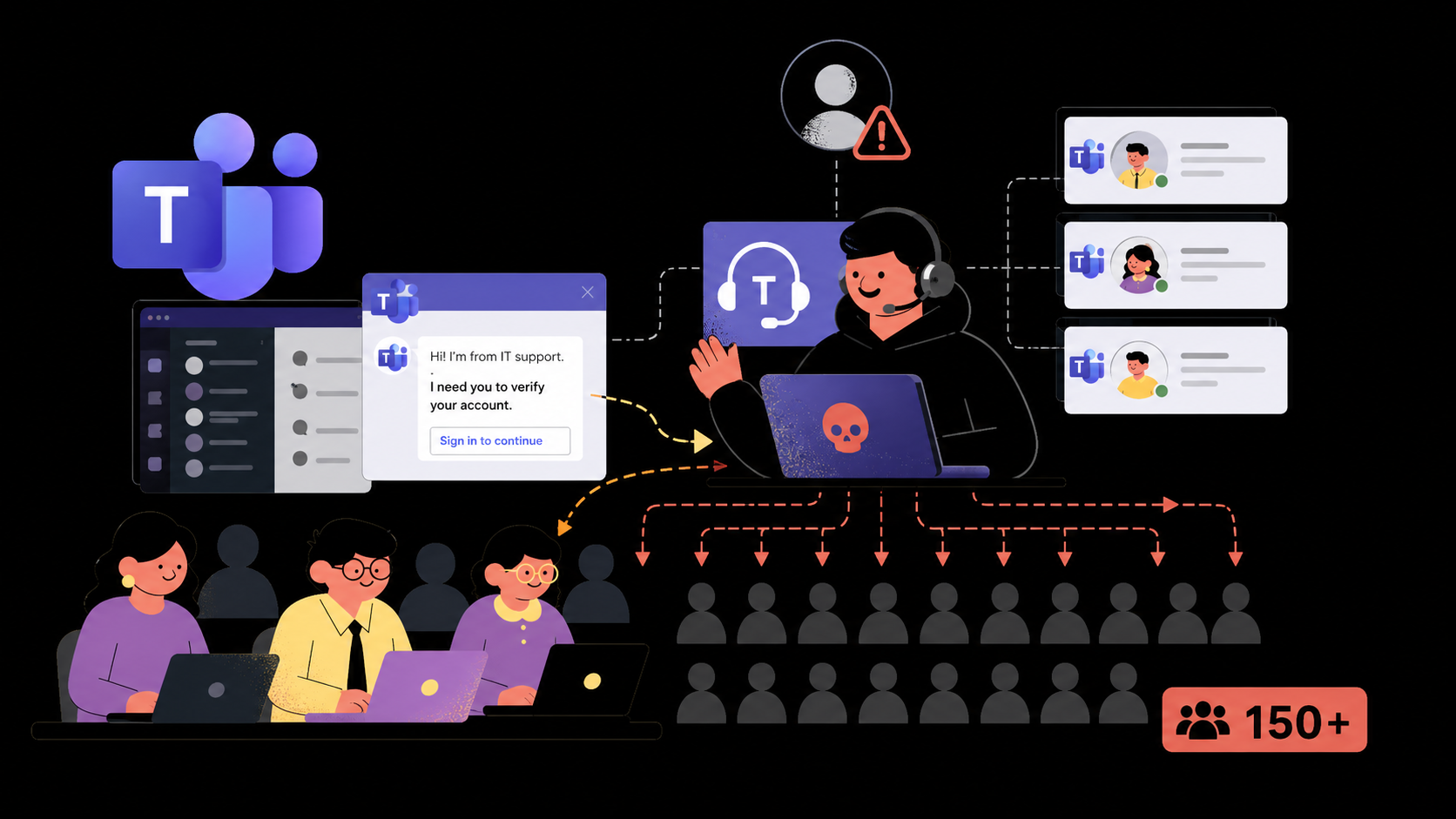
A coordinated social‑engineering operation known as "Spring Ring" used external Microsoft Teams accounts to pose as corporate IT support, reaching more than 150 employees across at least ten different organizations between January and April 2026.
The attackers created Teams identities that mimicked official help‑desk branding, then sent direct messages to staff members asking them to verify login credentials, install remote‑access utilities, or follow links to purported internal portals. Because the messages arrived within a trusted collaboration tool, many recipients treated the requests as legitimate IT instructions.
Security analysts who first uncovered the campaign say the operation was carefully timed and centrally managed, allowing the perpetrators to target a broad set of companies with a single playbook. By leveraging the real‑time nature of Teams chats, the group avoided the slower, more detectable email‑based phishing tactics that have dominated past years.
While the full extent of the breach remains under investigation, compromised accounts could grant attackers access to internal networks, confidential files, and additional communication channels. Early reports indicate that some victims inadvertently installed remote‑desktop software, potentially enabling lateral movement within their organizations.
The Spring Ring episode underscores a growing trend: cybercriminals are increasingly turning to collaboration platforms such as Teams, Slack, and Zoom to conduct social‑engineering attacks. These tools blur the line between personal and professional communication, making it harder for users to spot spoofed identities, especially when visual cues like logos and naming conventions appear authentic.
Experts recommend several immediate safeguards. Organizations should enforce multi‑factor authentication for all cloud services, institute strict verification procedures for any unsolicited IT request, and educate employees on the risks of responding to unexpected chat messages. Additionally, IT departments are urged to monitor for anomalous account creations and to employ conditional access policies that flag external identities attempting to interact with internal users. Law enforcement agencies have opened inquiries into the Spring Ring network, and further disclosures are expected as investigations progress.



Comments (0)
Be the first to comment.
Join the discussion