Hackers Target Langflow’s Code Validator to Steal AI and Cloud Credentials
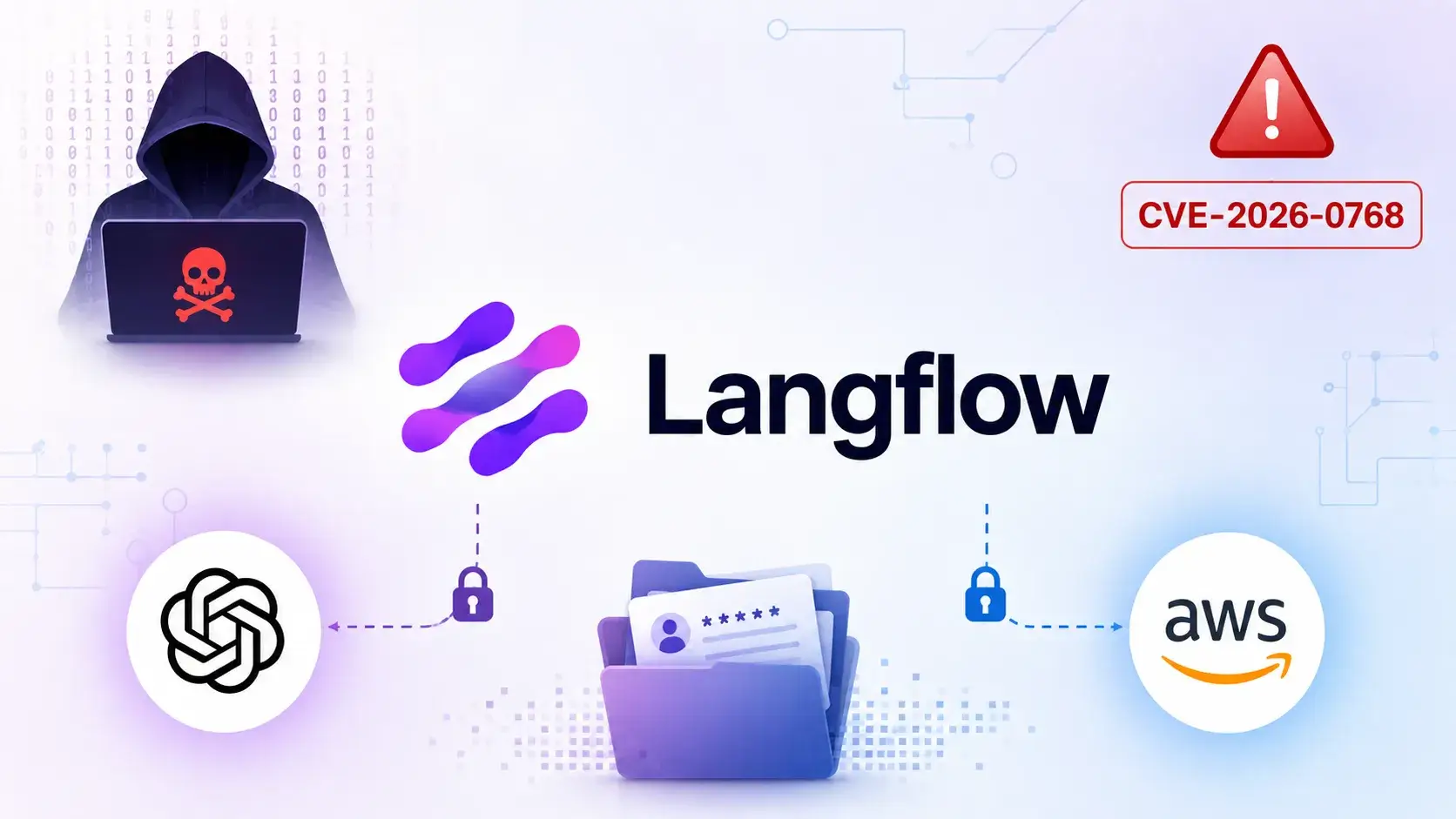
Security researchers have confirmed that threat actors are actively exploiting a critical remote code execution flaw in Langflow, a low‑code platform that enables developers to assemble AI‑driven applications and automate workflows. The vulnerability, catalogued as CVE-2026-0768, resides in the tool’s custom code validator and permits unauthenticated attackers to execute arbitrary commands on vulnerable servers.
According to the original report by GBHackers, the exploit chain allows malicious actors to harvest authentication tokens and secret keys for services such as OpenAI and Amazon Web Services (AWS). Those credentials can then be leveraged to run costly compute jobs, access proprietary data, or further compromise cloud environments.
Langflow has gained popularity among startups and enterprises looking to prototype generative‑AI solutions without deep programming expertise. Its visual interface abstracts much of the underlying infrastructure, but the recent flaw underscores the security trade‑offs inherent in low‑code ecosystems where code is often generated or validated automatically.
Security analysts note that the vulnerability is especially dangerous because it does not require prior access to the target system. By sending specially crafted inputs to the validator endpoint, an attacker can trigger the execution of shell commands, retrieve environment variables, and exfiltrate stored credentials. The open‑source nature of Langflow means that many deployments may be running outdated versions that lack the necessary patches.
Langflow’s maintainers have responded by releasing a patch that hardens the validator logic and adds stricter input sanitization. The advisory urges all users to upgrade to the latest release, rotate any exposed OpenAI and AWS keys, and review audit logs for suspicious activity. Organizations are also advised to implement network segmentation and least‑privilege policies for cloud credentials.
Experts warn that the incident illustrates a broader trend: as AI tooling becomes more accessible, attackers are increasingly targeting the supply chain of low‑code platforms to gain footholds in high‑value cloud environments. Continuous monitoring, timely patch management, and credential hygiene remain essential defenses.
While the full scope of the exploitation campaign is still being assessed, the incident serves as a reminder that even seemingly innocuous development tools can become vectors for sophisticated attacks. Stakeholders are encouraged to stay informed through official security advisories and to adopt a proactive stance on vulnerability management.



Comments (0)
Be the first to comment.
Join the discussion