Decade-Old OpenSSH Bug Enables Silent Linux Intrusions, CISA Issues Urgent Patch Advisory
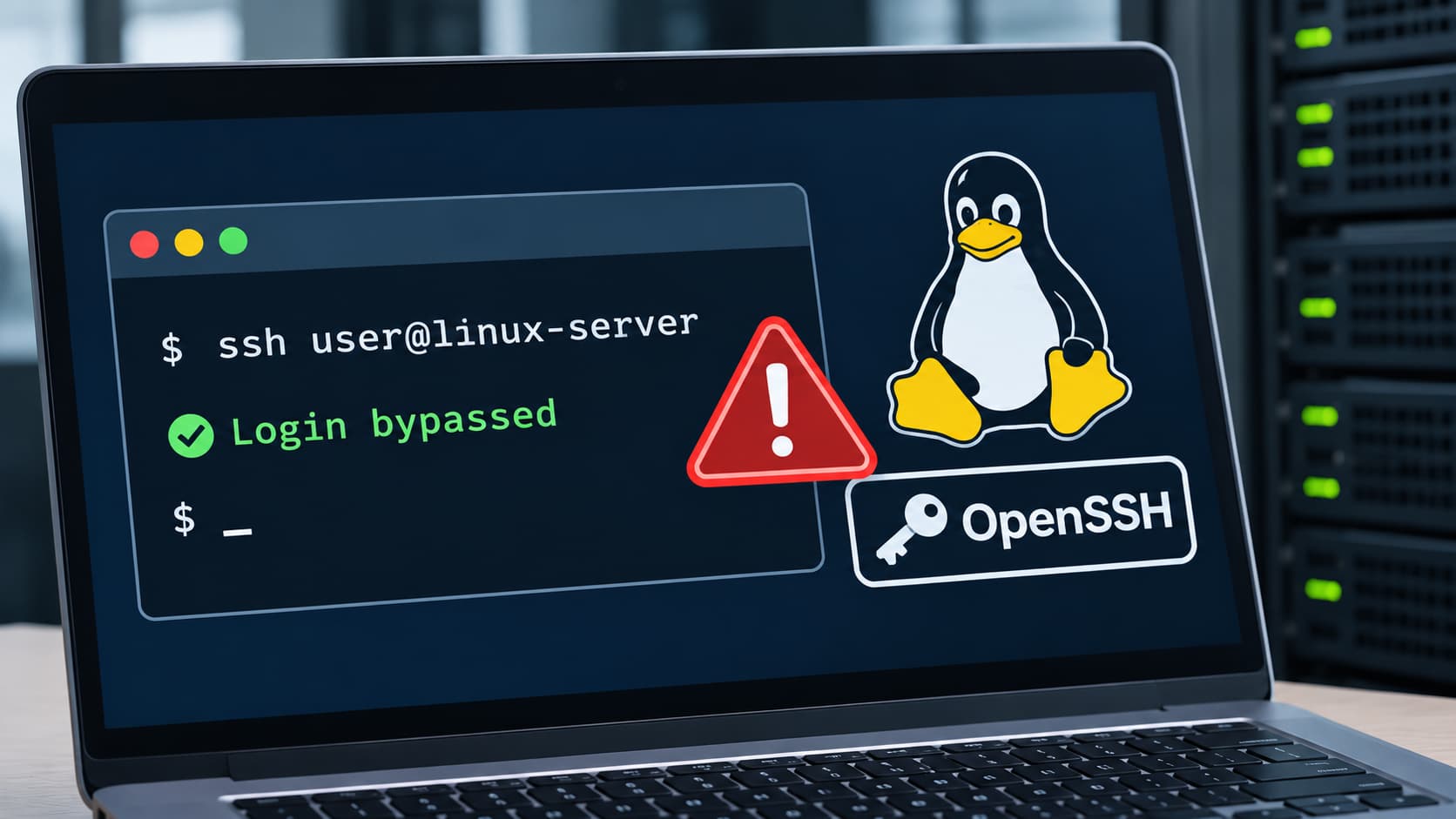
U.S. cybersecurity officials warned Tuesday that threat actors are actively exploiting a ten‑year‑old flaw in OpenSSH, the widely used secure shell implementation, to bypass Linux login controls and plant a Python‑based backdoor on compromised machines. The vulnerability, dubbed “SSHole” by researchers, allows attackers to sidestep authentication checks and gain remote code execution without triggering typical log‑on alerts.
The defect stems from how OpenSSH processes certain authentication packets, a weakness that has lingered in the code base since at least 2013. Although the issue was documented in security advisories years ago, it has rarely been seen in the wild. Recent activity suggests that malicious groups have refined the exploit to reliably subvert login mechanisms across a range of distributions.
Exploitation typically begins with a crafted network request that tricks the OpenSSH daemon into accepting a session without verifying credentials. Once inside, the intruder drops a lightweight Python script that serves as a persistent backdoor, enabling further commands and data exfiltration while blending into normal system processes. Because the payload runs under the context of the compromised user, it can evade many conventional detection tools.
In response, the Cybersecurity and Infrastructure Security Agency (CISA) released an emergency advisory urging administrators to apply the newly published patches immediately. Major Linux vendors—including Debian, Ubuntu, and Red Hat—have already rolled out updated OpenSSH packages that close the authentication bypass. CISA’s notice emphasizes rapid deployment, especially for servers exposed to the internet or those handling sensitive workloads.
Security experts caution that organizations with lagging patch cycles remain at heightened risk. The ability to infiltrate systems without leaving a trace on standard login logs could facilitate large‑scale credential harvesting, ransomware deployment, or espionage operations. Administrators are advised to review audit trails for unexplained session activity, monitor for unexpected Python processes, and enforce multi‑factor authentication where possible.
Looking ahead, researchers expect additional signatures and detection rules to emerge as the community studies the exploit’s behavior. The episode underscores the broader challenge of maintaining legacy software components that, despite their stability, can harbor hidden vulnerabilities. Prompt patching, continuous monitoring, and a robust incident‑response plan are now being touted as essential defenses against this renewed OpenSSH threat.


Comments (0)
Be the first to comment.
Join the discussion