Hackers Exploit Weak SQL Server Credentials to Install Monero Miner and Gh0st RAT
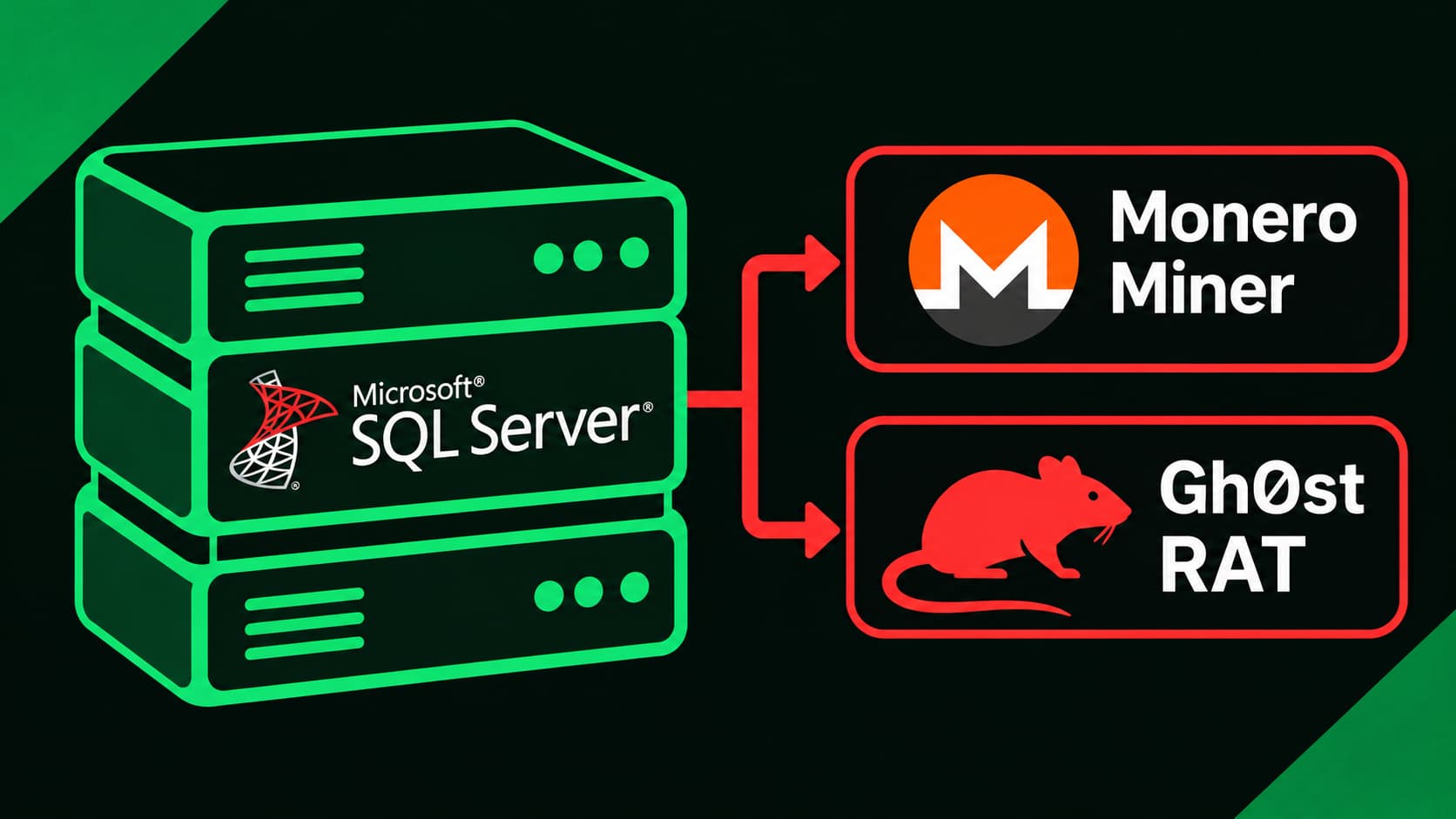
Cybercriminals are leveraging poorly secured Microsoft SQL Server instances to silently install a Monero cryptocurrency miner and the Gh0st Remote Access Trojan, security researchers reported. The intrusion method hinges on default or weak passwords that allow attackers to execute commands through built‑in database features, turning compromised servers into profit‑generating bots.
The technique involves logging into the SQL server with stolen credentials, then using the server's ability to run system commands via stored procedures such as xp_cmdshell. Once access is obtained, the malicious actors drop a mining script that taps into the privacy‑focused Monero network, as well as the Gh0st RAT, which provides ongoing remote control and data exfiltration capabilities.
Monero is a popular target for illicit mining because its blockchain obscures transaction details, making it harder for authorities to trace profits. At the same time, the Gh0st RAT, a tool that first appeared in the mid‑2000s, continues to be repurposed by modern threat actors for espionage and ransomware preparation. By bundling both payloads, attackers maximize financial gain while retaining a foothold for future operations.
Security analysts note that the rise in SQL server compromises is tied to organizations neglecting basic hardening practices. Default administrative accounts, predictable passwords, and disabled security features like multi‑factor authentication create an environment where automated scanning tools can quickly locate vulnerable machines. Once identified, the servers can be commandeered without alerting traditional intrusion‑detection systems that focus on web‑server traffic.
Experts advise immediate remediation steps: enforce strong, unique passwords for all database accounts, disable unnecessary features such as xp_cmdshell, and apply the latest security patches from Microsoft. Network segmentation can also limit the blast radius by restricting database access to only trusted application servers.
Beyond technical fixes, the incident underscores a broader trend of attackers repurposing legacy tools for contemporary profit models. While the Gh0st RAT is an older piece of malware, its inclusion demonstrates that even dated remote‑access utilities retain value when paired with lucrative crypto‑mining operations. This hybrid approach complicates detection, as mining activity may be masked by legitimate server workloads.
Law enforcement agencies are monitoring the situation, but attribution remains difficult due to the anonymized nature of Monero transactions and the use of compromised infrastructure. Organizations are urged to conduct thorough audits of their SQL server deployments, review access logs for unusual command execution, and consider employing behavior‑based monitoring to spot the subtle resource spikes typical of covert mining.
As the cybersecurity community continues to share indicators of compromise, the hope is that heightened awareness will prompt faster patch cycles and stricter credential policies, reducing the attack surface that enables these dual‑payload intrusions.


Comments (0)
Be the first to comment.
Join the discussion