GNSS Spoofing and Jamming Threaten RTK Accuracy, Field Crews Urged to Stay Vigilant
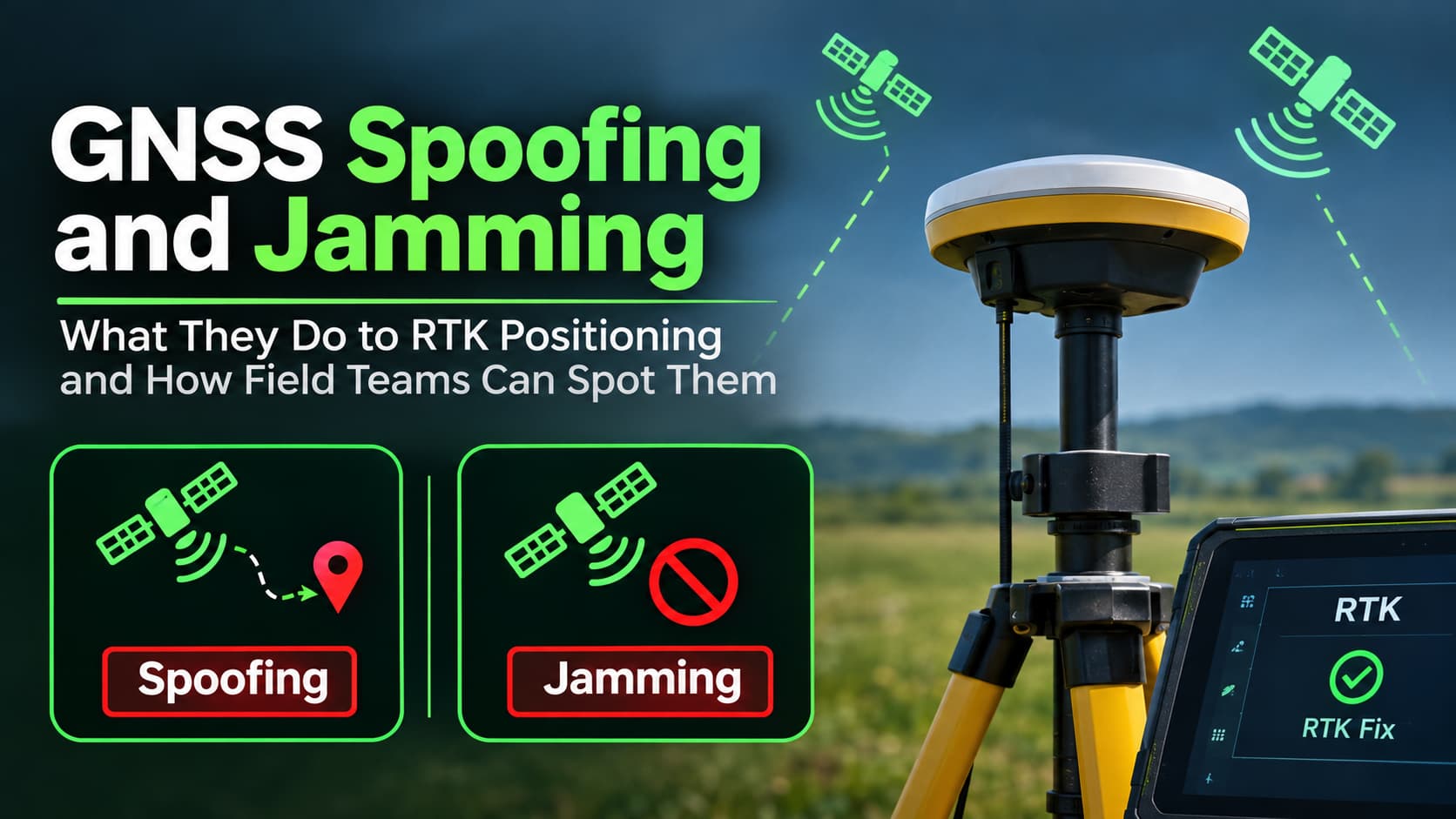
Satellite‑based positioning systems that support Real‑Time Kinematic (RTK) workflows can be compromised without obvious warning signs, experts say, as both spoofing and jamming attacks can cause a rover to lose its fixed solution even while the device appears to be functioning normally.
RTK relies on continuous, high‑quality carrier‑phase measurements from a network of reference stations to resolve integer ambiguities and deliver centimeter‑level coordinates. The method is prized in construction, surveying, and autonomous‑vehicle operations, where a single meter of error can be costly.
In a spoofing scenario, an adversary transmits counterfeit GNSS signals that mimic genuine satellite broadcasts. The rogue signals can trick a rover into calculating an incorrect position while still reporting a lock on the constellation, making the error difficult to spot without dedicated monitoring.
Jamming, by contrast, involves flooding the receiver with radio‑frequency noise that drowns out legitimate satellite transmissions. When the signal‑to‑noise ratio falls below usable thresholds, the rover may retain its last known fix or revert to a float solution, both of which degrade the precision required for RTK work.
Field teams are advised to watch for tell‑tale symptoms: sudden transitions from a fixed to a float or no‑solution status, unexplained drops in carrier‑phase signal strength, and inconsistencies when cross‑checking coordinates against nearby known benchmarks. Using multi‑constellation receivers, logging raw observation data, and employing integrity monitors that flag abnormal ambiguity resolutions can help identify interference early.
Industry observers note that heightened awareness and training are essential as the cost of GNSS disruption grows. Integrating anti‑spoofing filters, maintaining backup positioning methods such as inertial navigation, and staying informed about regional regulatory actions on signal interference are recommended steps to safeguard RTK‑dependent projects.


Comments (0)
Be the first to comment.
Join the discussion