Scammers Pose as GTA VI Streamer to Deploy Password‑Stealing Malware on Windows PCs
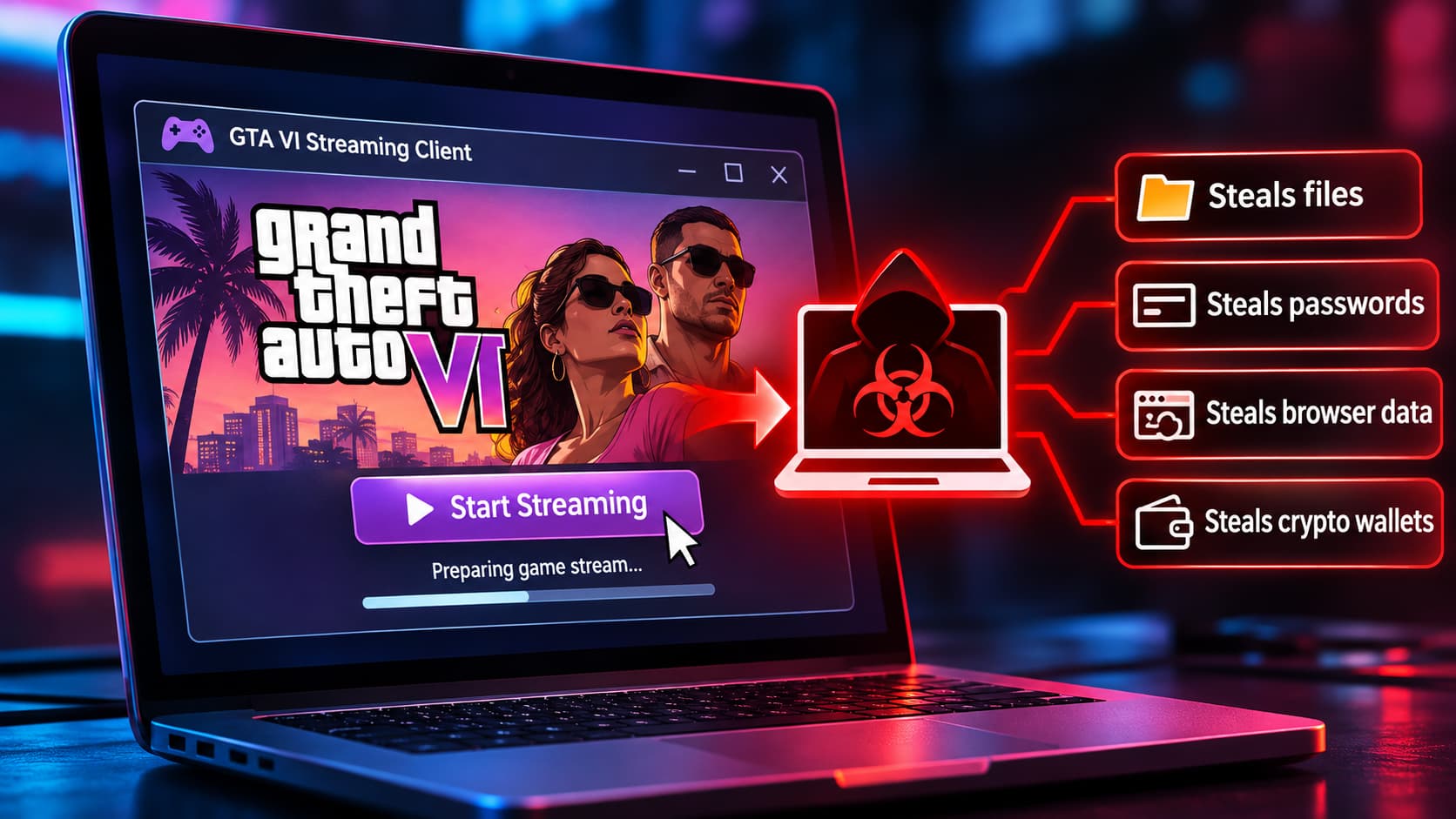
Bitdefender has issued a warning about a malicious program that pretends to be a streaming client for the highly anticipated Grand Theft Auto VI, targeting Windows computers with data‑stealing malware.
The counterfeit client is promoted on websites that claim to offer free, high‑quality streams of the unreleased game. Visitors are urged to download an executable that supposedly launches the stream, but the file silently installs a trojan that runs in the background once the system is rebooted.
According to the security firm, the trojan is designed to harvest a range of sensitive information stored on the infected machine. It scans for saved passwords in browsers, extracts authentication tokens, and locates cryptocurrency wallet files, relaying the data to remote servers controlled by the attackers.
Bitdefender’s researchers first observed the campaign in early October and shared technical details with the cybersecurity community. The story was initially reported by Hackread, which highlighted the rapid spread of the fake client among gamers searching for unofficial ways to play GTA VI before its official launch.
The timing of the scam aligns with the intense buzz surrounding Rockstar Games’ upcoming title. As anticipation builds, many players turn to unofficial streaming solutions to avoid purchase costs or to experience the game ahead of schedule, creating a fertile environment for fraudsters to distribute malicious payloads.
Security experts advise users to avoid downloading software from unverified sources, especially executables that claim to provide free game streams. Installing reputable antivirus software, keeping operating systems and applications up to date, and enabling two‑factor authentication for online accounts can reduce the risk of credential theft.
Bitdefender has updated its threat database to flag the rogue client and is working with law‑enforcement partners to trace the operators behind the scheme. Users who suspect infection are urged to run a full system scan and consider changing passwords for any accounts that may have been compromised.


Comments (0)
Be the first to comment.
Join the discussion