Defense Budgets Brace for a Cyber Boom as Military Networks Face Escalating Threats
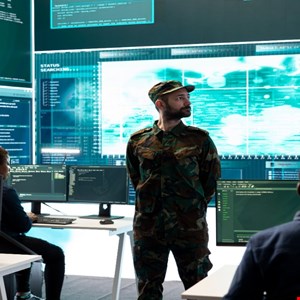
Global market research firm MarketsandMarkets forecasts that the cyber warfare sector will roughly double in size by 2031, a projection that signals a looming surge in defense spending on both protective and offensive digital capabilities.
The estimate reflects a pattern of increasingly sophisticated attacks targeting military information systems worldwide. Recent incidents ranging from ransomware disruptions of naval logistics platforms to covert intrusions of air‑force command networks have underscored the vulnerability of critical defence infrastructure. As adversaries refine their tools, governments are responding by earmarking larger portions of their defence budgets for cyber readiness.
Analysts attribute the market growth to several converging forces. First, the digitisation of weapons platforms—such as network‑enabled aircraft, autonomous drones, and cloud‑based command centres—creates broader attack surfaces. Second, the strategic value of cyber operations has risen, with nations seeking to augment kinetic force with the ability to disrupt, degrade, or manipulate enemy systems without firing a shot. Finally, the rapid evolution of technologies like artificial intelligence and quantum computing promises both new offensive possibilities and fresh defensive challenges.
In response, defence ministries across NATO, Asia‑Pacific, and the Middle East are revising procurement strategies. Funding that once prioritized traditional hardware is being redirected toward cyber‑security units, threat‑intelligence sharing frameworks, and the development of offensive cyber toolkits. Some countries are also expanding partnerships with private‑sector firms that specialize in threat detection, vulnerability assessment, and rapid incident response.
The shift carries strategic implications beyond budgeting. A more capable cyber arm can act as a force multiplier, allowing smaller militaries to offset conventional disparities. Conversely, the escalation may provoke a cyber arms race, where states feel compelled to develop offensive capabilities simply to deter potential attacks. Policy makers are therefore grappling with questions of legal norms, rules of engagement, and the attribution of cyber incidents—issues that remain unsettled in international law.
Looking ahead, experts warn that the pace of change will demand continual adaptation. As the market expands, the talent pool of skilled cyber professionals will become a critical strategic asset, prompting defence agencies to compete with the private sector for recruitment and retention. Moreover, the integration of emerging technologies will likely introduce new vulnerabilities, necessitating ongoing investment in research, testing, and resilient system design. The projected market growth thus signals not only a financial shift but also a broader transformation of how modern militaries conceive and secure their operational capabilities.



Comments (0)
Be the first to comment.
Join the discussion