Cisco Issues Emergency Patch for Nexus 9000 Switches After Critical Remote Code Execution Flaw Discovered
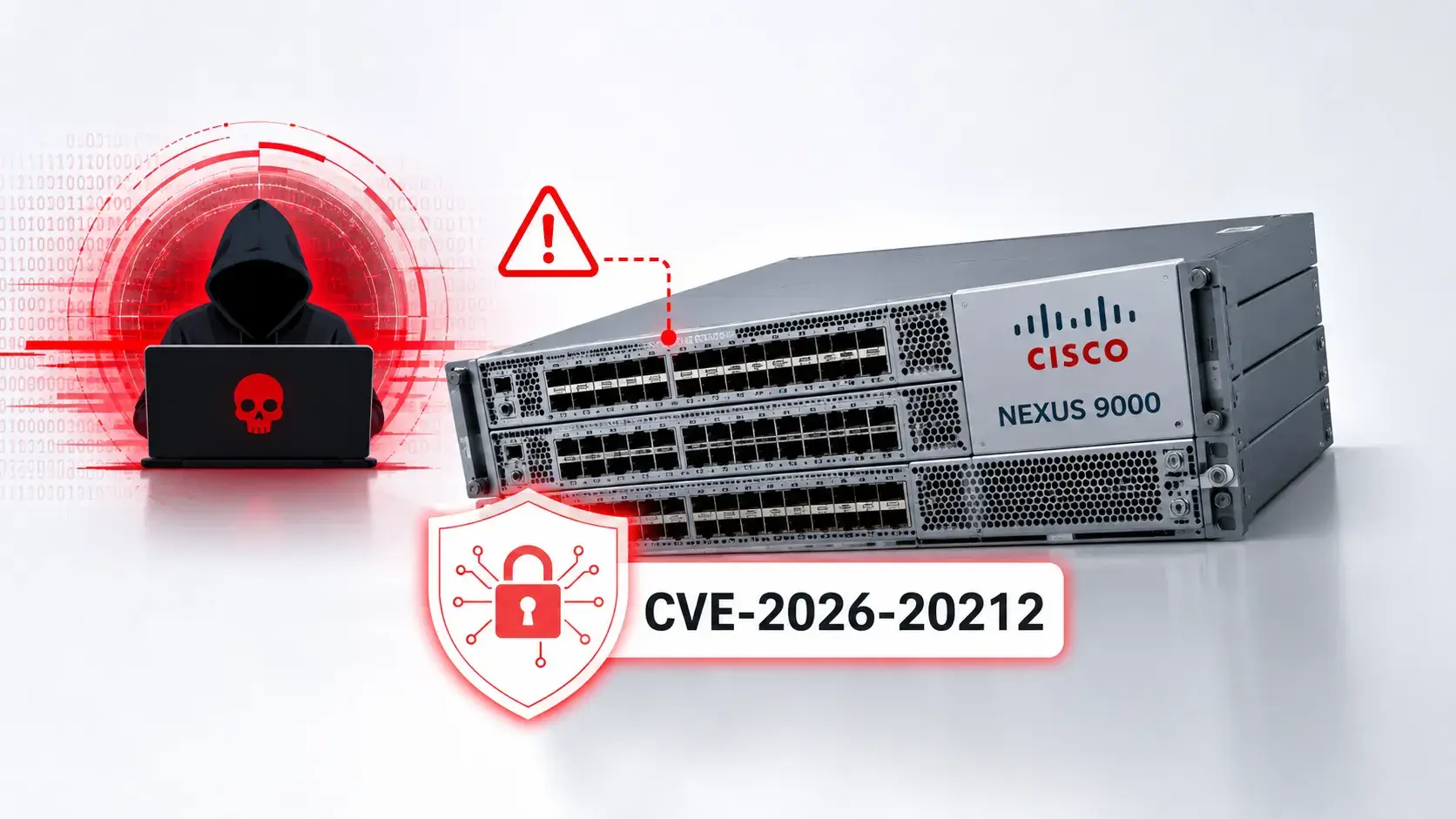
Cisco has rolled out security updates for its Nexus 9000 series switches after a critical vulnerability was disclosed that enables unauthenticated attackers to execute arbitrary code with root privileges.
The flaw, catalogued as CVE-2026-20212, received a maximum CVSS rating of 9.8, indicating a severe risk. It resides in the switch firmware and can be triggered remotely without any credential check, allowing an adversary to gain full control of the device.
Nexus 9000 switches are a core component of many enterprise and service‑provider data centers, handling high‑volume traffic and often serving as the backbone for virtualized workloads. Compromise of a single unit can provide an attacker with a foothold inside a network, facilitating lateral movement, data exfiltration, or disruption of critical services.
Cisco published an advisory urging customers to apply the newly released patches immediately. The updates address the vulnerable code path and restore proper authentication checks. Cisco also provided guidance on verifying firmware versions, backing up configurations, and testing the patches in a controlled environment before full deployment.
The vulnerability was initially reported by the independent security group GBHackers, prompting a rapid response from Cisco’s product security team. Analysts note that the speed of the vendor’s remediation is consistent with industry expectations for high‑severity flaws in networking equipment.
Security professionals are advised to audit their inventories for any Nexus 9000 devices running pre‑patch firmware, prioritize remediation, and monitor network traffic for signs of exploitation. As firmware‑level weaknesses continue to surface across the hardware supply chain, the incident underscores the importance of timely patch management and layered defenses in modern data‑center environments.



Comments (0)
Be the first to comment.
Join the discussion