China Dismisses AI Pause Initiative as U.S. Strategic Maneuver
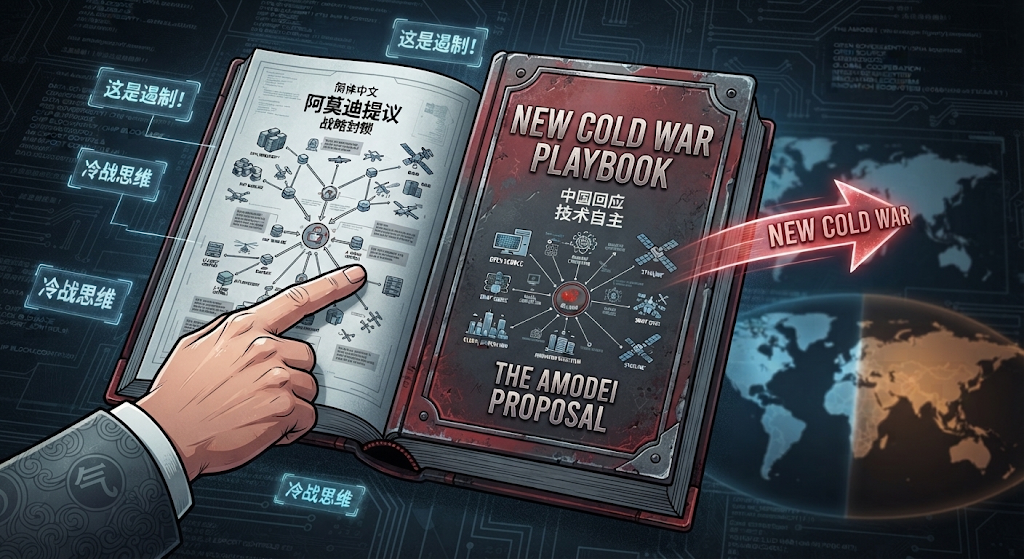
Beijing has publicly rejected a proposal championed by AI researcher Dario Amodei to temporarily halt the development of advanced artificial intelligence systems, describing the suggestion as fear‑mongering and a calculated move by the United States to contain China’s burgeoning technology sector.
Amodei, a former executive at OpenAI and co‑founder of Anthropic, urged governments and leading AI firms to agree on a coordinated pause while safety protocols and governance frameworks are put in place. The call emerged amid accelerating breakthroughs in large language models and generative AI, which have sparked debates about potential misuse, ethical dilemmas, and existential risks.
Chinese officials responded swiftly, characterising the proposal as a “new Cold War playbook” aimed at stifling Chinese innovation. A spokesperson for the Ministry of Industry and Information Technology warned that external pressure to slow AI progress could undermine China’s strategic objectives and hamper its ability to compete on the global stage. The ministry’s statement framed the initiative as part of a broader U.S. effort to shape the international technology landscape to its advantage.
The episode illustrates how a discussion that began as a technical safety issue has rapidly expanded into a geopolitical contest. Analysts note that the AI arms race mirrors earlier competitions in semiconductors, 5G, and quantum computing, where national security and economic leadership are tightly intertwined. While several Western countries are exploring regulatory measures, China’s outright dismissal signals that any multilateral framework will have to navigate deep mistrust between the two powers.
Looking ahead, policymakers in Washington, Beijing, and other capitals face the challenge of separating genuine safety concerns from strategic posturing. International forums such as the G20 and the OECD are expected to host further dialogue, but the path to a consensus on AI governance remains uncertain. For now, the debate underscores that the future of artificial intelligence will be shaped as much by diplomatic calculations as by technical breakthroughs.



Comments (0)
Be the first to comment.
Join the discussion