Latin America Faces Surge in Casbaneiro Banking Trojan Leveraging Distributed C2 Network
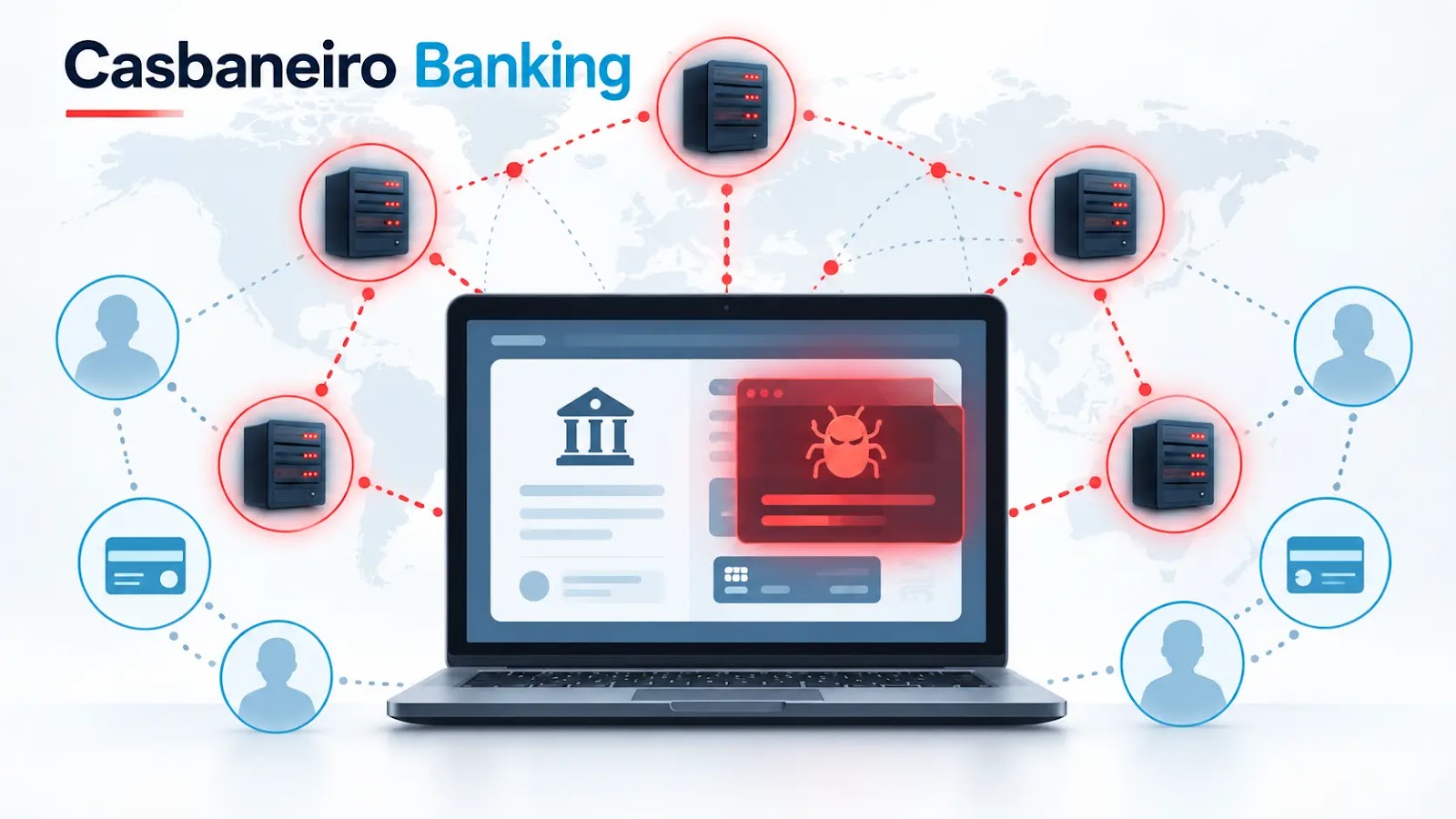
Security researchers have identified a new wave of the Casbaneiro banking Trojan sweeping across Latin America, employing a sophisticated infrastructure that includes geofenced payload delivery and a dispersed command‑and‑control (C2) network. The campaign, first observed in August 2026, relies on phishing emails and malicious links to lure victims into downloading the malware, which then intercepts banking credentials and initiates unauthorized transactions.
Unlike earlier variants that depended on a handful of centralized servers, the current operation routes malicious traffic through dozens of C2 nodes spread across multiple jurisdictions. This distribution makes it harder for defenders to block the traffic or shut down the entire botnet, as takedown attempts against a single server have limited impact on the overall operation.
Analysts note that the attackers have integrated geofencing techniques into the delivery chain, ensuring that the malicious payload is only activated for users located in specific countries within the region. By tailoring the infection vector to local banking apps and language settings, the operators increase the likelihood of successful credential theft while reducing the chance of early detection by security tools that monitor for generic, worldwide attacks.
The resurgence of Casbaneiro comes at a time when financial institutions in Latin America are already grappling with heightened cyber‑crime activity. According to industry reports, the region has seen a year‑over‑year rise in malware‑based fraud, driven in part by increased online banking adoption during the pandemic era. The new Trojan’s ability to blend into legitimate traffic and its use of encrypted communications further complicate detection efforts.
Cyber‑security firms and national CERTs have issued advisories urging users to verify the authenticity of emails, avoid clicking on unsolicited links, and enable multi‑factor authentication where possible. Some banks are rolling out additional monitoring for anomalous transaction patterns and deploying behavior‑based detection solutions that can flag the tell‑tale signatures of banking trojans, even when the underlying C2 infrastructure is obfuscated.
Experts predict that the attackers may continue to evolve the campaign, potentially adding new evasion tactics such as fast‑flux DNS and domain‑generation algorithms to stay ahead of defensive measures. Ongoing collaboration between private security vendors, law‑enforcement agencies, and the banking sector will be crucial to disrupt the distributed C2 network and mitigate further financial losses for consumers across the continent.



Comments (0)
Be the first to comment.
Join the discussion