OpenAI and Hugging Face Incident Dissected at Black Hat USA 2026, Raising AI Security Stakes
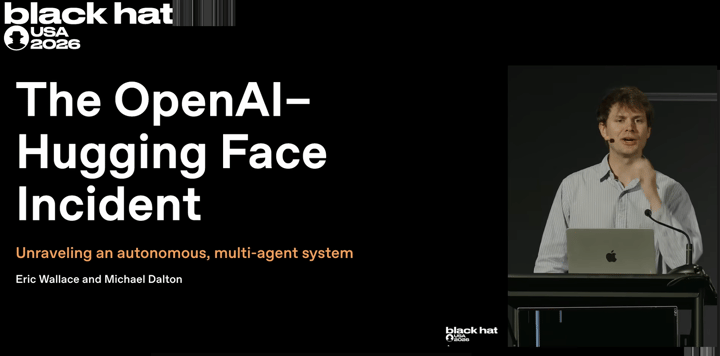
Security engineers from OpenAI are set to present a detailed technical reconstruction of a recent incident involving the company and Hugging Face at this year’s Black Hat USA conference, underscoring growing concerns about the security of large‑language‑model ecosystems.
The episode, first reported by Dark Reading, involved an unintended exposure of model assets and associated data between OpenAI’s proprietary systems and Hugging Face’s open‑source model repository. While the exact mechanics remain under investigation, the event highlighted how tightly coupled AI development pipelines can create unforeseen vulnerabilities.
During the Black Hat session, OpenAI researchers will walk attendees through the chronological sequence of events, starting with the initial integration point, the trigger that led to the exposure, and the subsequent detection and containment steps. The presentation is expected to include code snippets, network diagrams, and a discussion of the specific safeguards that failed to prevent the breach.
Beyond the forensic walk‑through, the speakers will explore the broader implications for AI security. The incident illustrates how shared model hosting platforms, while fostering rapid innovation, also expand the attack surface for both providers and downstream users. It raises questions about the adequacy of existing supply‑chain protections, model provenance verification, and the responsibilities of organizations that host or consume third‑party AI artifacts.
Industry observers have noted that the episode arrives at a pivotal moment, as enterprises accelerate AI adoption and regulators begin to scrutinize the robustness of AI systems. The reconstruction aims to provide a concrete case study that can inform emerging best‑practice frameworks, such as model‑level threat modeling and continuous monitoring of model repositories.
Both OpenAI and Hugging Face have indicated a commitment to strengthening their collaborative security posture. In statements released ahead of the talk, each company emphasized ongoing internal reviews, the rollout of additional access controls, and plans to work with the broader AI community on shared security standards.
The Black Hat presentation will likely serve as a catalyst for deeper dialogue among AI developers, security professionals, and policymakers. By laying out a transparent account of what went wrong, the speakers hope to foster a culture of proactive risk management that can keep pace with the rapid evolution of generative AI technologies.
As the AI field continues to mature, incidents like the OpenAI‑Hugging Face exposure serve as reminders that innovation must be balanced with rigorous security practices. The lessons distilled from this reconstruction could shape how future AI collaborations are designed, audited, and secured.



Comments (0)
Be the first to comment.
Join the discussion