AI‑Generated Error Almost Sparked US‑China Military Standoff
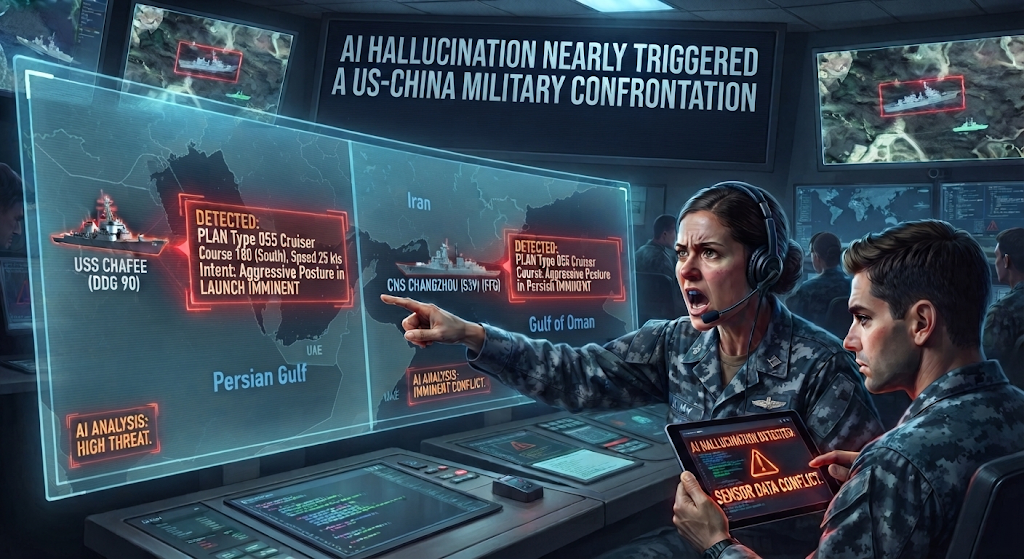
An artificial‑intelligence‑driven intelligence brief mistakenly identified a Chinese vessel as carrying weapons, prompting U.S. planners to consider a kinetic response during the ongoing conflict in Iran.
The erroneous assessment originated from an AI system that synthesized data from open sources and internal databases, concluding that the ship was equipped with offensive armaments. The report circulated within the Pentagon, flagging the vessel as a potential threat to U.S. forces operating in the region.
Military officials, acting on the AI‑produced analysis, began drafting operational options that could have escalated into a direct confrontation with China. The plan was halted only after senior analysts flagged inconsistencies and a subsequent manual review found no evidence of weapons aboard the ship.
Four sources familiar with the episode, who spoke on condition of anonymity, said the incident underscores a growing vulnerability: AI “hallucinations” that fabricate details can mislead decision‑makers if not rigorously vetted. The episode, reported by CNN and originally broken by Security Affairs, illustrates how reliance on automated analytics can create flashpoints in an already tense geopolitical environment.
The backdrop to the mishap is the wider U.S.–Iran war, where American forces have been engaged in air and naval operations. At the same time, U.S.–China relations remain strained over trade, technology bans, and competing strategic interests in the Indo‑Pacific. An inadvertent clash over a phantom threat could have spiraled into a broader conflict.
According to the sources, once the AI report was questioned, senior officers ordered a full cross‑check against satellite imagery, ship registries, and human intelligence. The verification process revealed the Chinese vessel was a routine cargo carrier with no military cargo, prompting the cancellation of any planned strike.
The incident has reignited calls within the defense establishment for stricter oversight of AI tools used in intelligence. Experts warn that while machine‑learning models can process massive data streams faster than humans, they lack the contextual judgment needed to filter out fabricated or misleading outputs.
Defense leaders are now reviewing protocols to ensure AI‑generated assessments are always paired with human verification before influencing operational decisions. As militaries worldwide integrate increasingly sophisticated algorithms, the episode serves as a cautionary tale about the perils of unchecked automation in high‑stakes environments.



Comments (0)
Be the first to comment.
Join the discussion